Mysteries at the Fringes of Our Solar System
Far beyond the orbit of Neptune lies a vast, frigid realm largely untouched by sunlight: the Kuiper Belt. Rather than an empty expanse of frozen void, this region serves as a massive cosmic laboratory housing ancient relics from the birth of our solar system roughly 4.6 billion years ago. It is here that astronomers trace the primary reservoir of many comets—celestial icy wanderers that periodically illuminate Earth's night sky with brilliant glowing tails.
Understanding the Kuiper Belt and Its Inhabitants
The Kuiper Belt is a donut-shaped circumstellar disc extending from roughly 30 to 50 Astronomical Units (AU) from the Sun—where 1 AU equals the average distance between Earth and the Sun (approximately 150 million kilometers). Named after astronomer Gerard Kuiper, who hypothesized its existence in 1951, the belt was definitively confirmed in 1992 when astronomers David Jewitt and Jane Luu discovered the first modern Kuiper Belt Object (KBO), 1992 QB1.
This outer realm is home to millions of icy bodies and celebrated dwarf planets, including Pluto, Eris, Haumea, and Makemake. Composed of silicate rocks and frozen volatiles such as water, methane, and ammonia, these planetesimals never coalesced into full-sized planets due to early gravitational perturbations from the gas giants.
Where Do Comets Come From?
Astronomers classify comets primarily by their orbital periods, identifying two distinct cosmic nurseries at the edge of the solar system:
- Short-Period Comets: Requiring fewer than 200 years to orbit the Sun (such as Comet Encke and Comet 67P/Churyumov-Gerasimenko), these objects originate from the Kuiper Belt and its dynamically active extension known as the Scattered Disc. Gravitational interactions with Neptune frequently perturb these icy bodies, sending them plunging toward the inner solar system.
- Long-Period Comets: Taking thousands to millions of years to complete an orbit (such as Comet Hale-Bopp), these originate from the distant, spherical Oort Cloud, located far beyond the Kuiper Belt between 2,000 and 100,000 AU away.
Cosmic Time Capsules and the Origins of Life
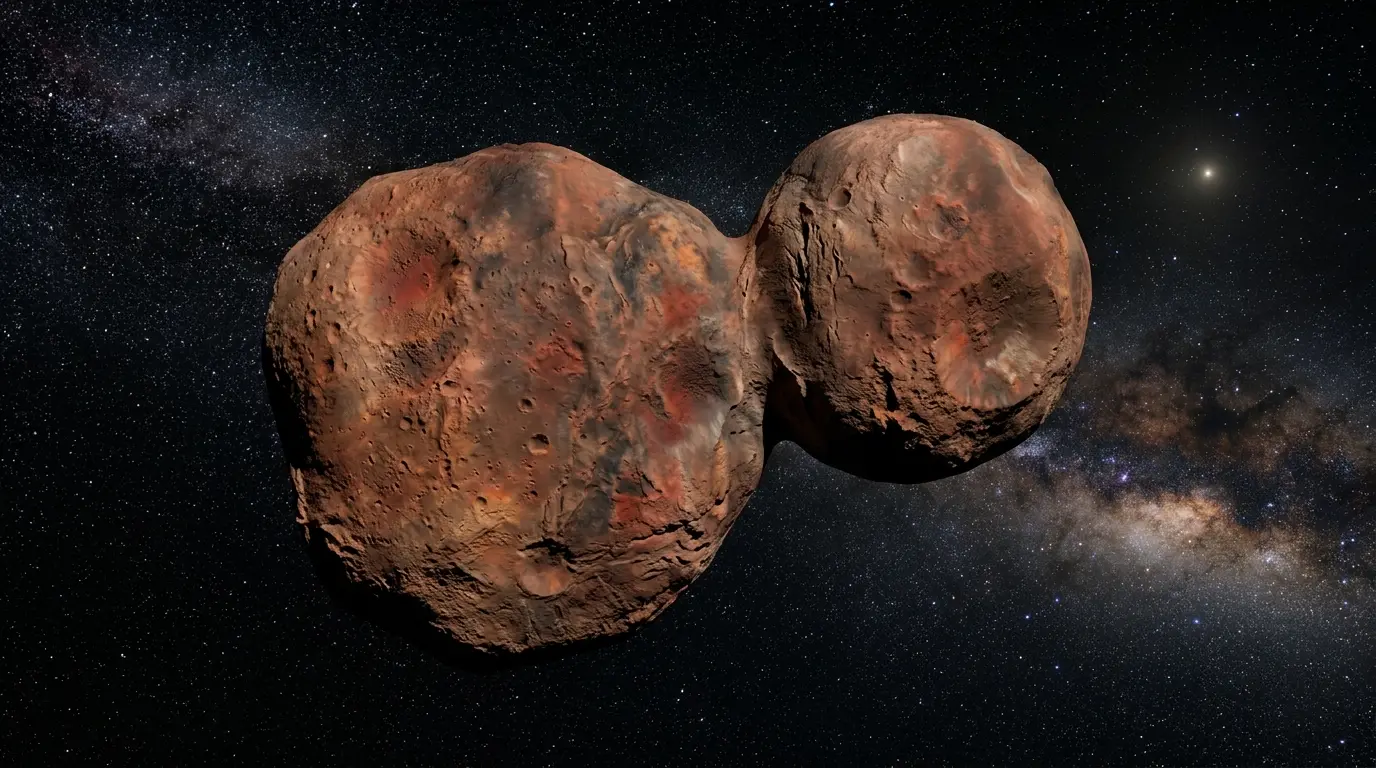
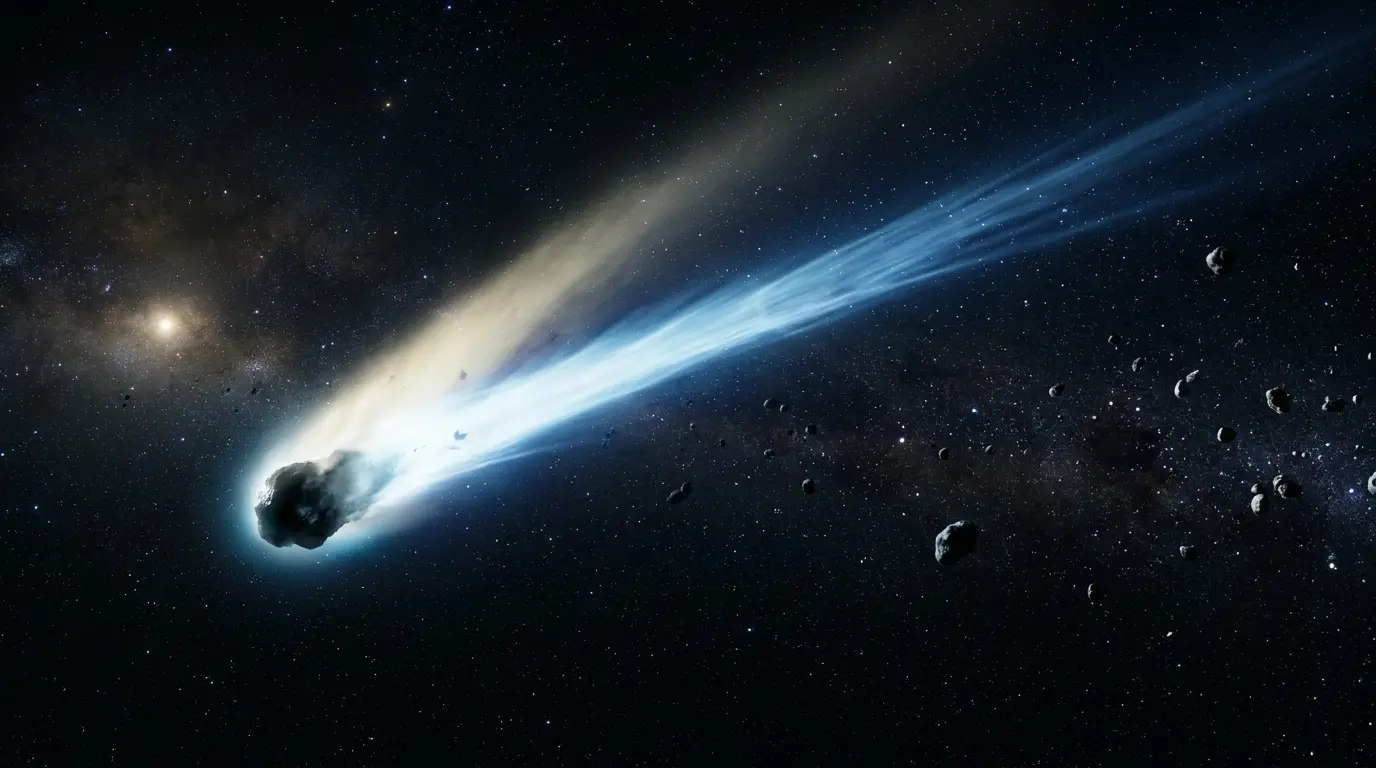
As an icy wanderer from the Kuiper Belt approaches the Sun, solar radiation heats its frozen mantle, causing ices to sublimate directly into gas. This process generates the brilliant coma and swept-back dust and ion tails characteristic of active comets. Milestone missions, notably NASA's New Horizons flyby of Pluto in July 2015 and the pristine contact binary Arrokoth in January 2019, revealed that Kuiper Belt objects have remained virtually unaltered for billions of years.
"Comets and Kuiper Belt objects serve as pristine time capsules, preserving the raw ingredients that formed the planets, along with water and organic molecules delivered to early Earth."
By unraveling the secrets of the Kuiper Belt and tracing the trajectories of comets, scientists continue to decode the turbulent evolution of our solar system and the origins of life-supporting environments.