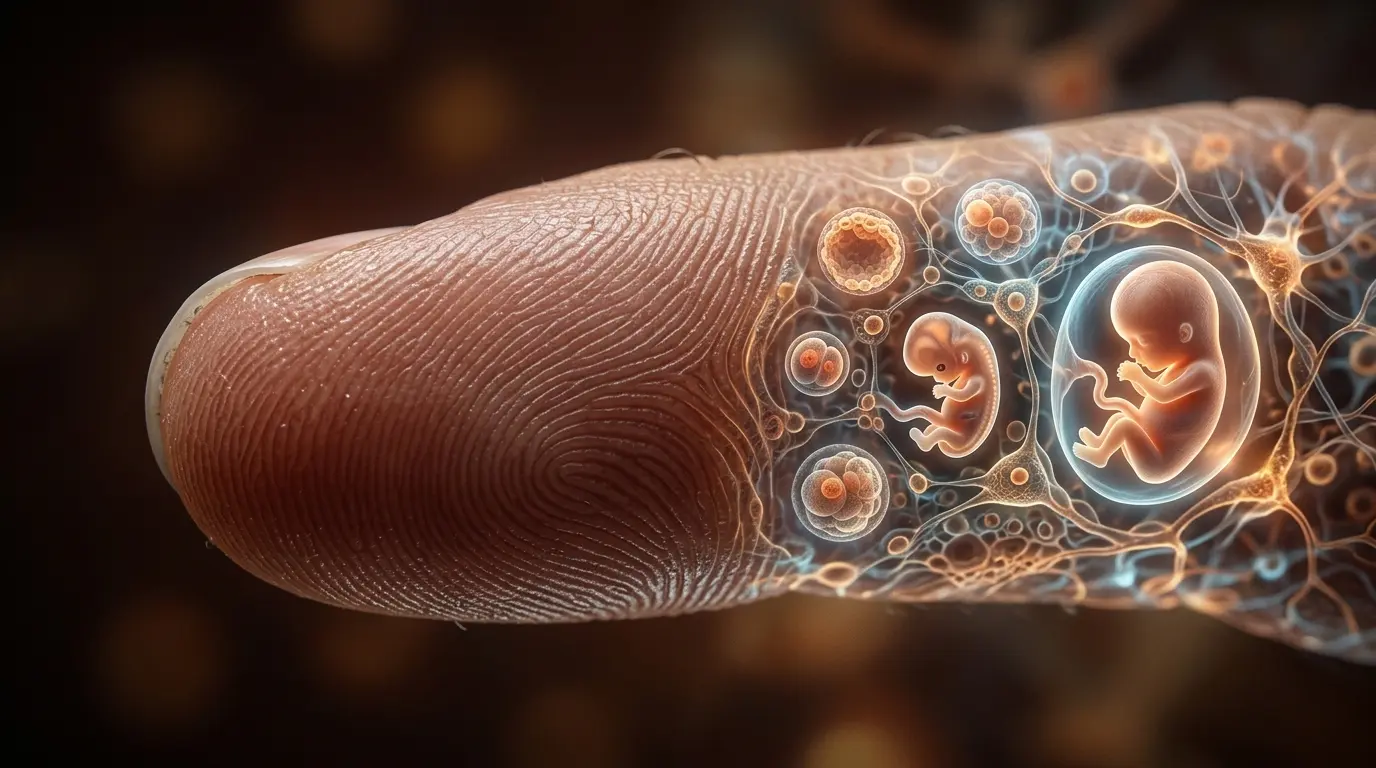
Human fingerprints represent one of nature's most iconic biometric identifiers. Even monozygotic (identical) twins who share virtually 100% of their DNA possess distinct fingerprints. But when and how do these intricate skin patterns permanently form? The scientific answer unfolds deep inside the human womb during the first and second trimesters of gestation.
The Early Blueprint: Volar Pads in the First Trimester
The architectural foundation of fingerprints begins around gestational weeks 6 to 7. At this stage, fetal hand plates resemble small paddles and sprout localized swelling mounds of embryonic mesenchyme known as volar pads across the fingertips and palms.
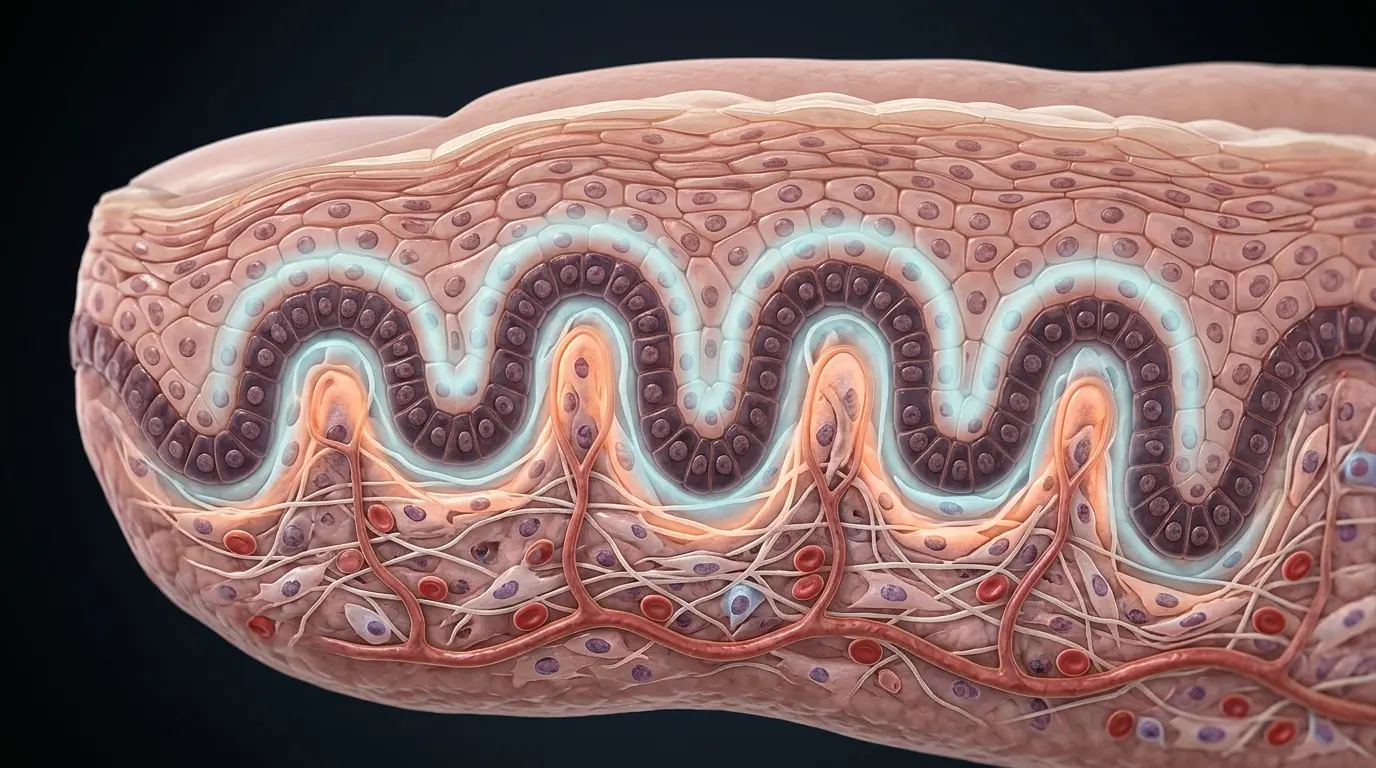
Around the 10th week of pregnancy, these volar pads stop expanding and begin to gradually regress (flatten). This regression creates precise mechanical stress and shear strains across the fetal skin layers. Simultaneously, cells in the stratum basale—the rapidly dividing basal layer of the epidermis—proliferate faster than adjacent layers. This buckling instability forces the tissue to fold downward into the dermis, establishing the first primary ridges between gestational weeks 10 and 15.
Turing Reaction-Diffusion: The Waves That Shape the Ridges
How do these primary ridges organize into complex arches, loops, and whorls? Modern developmental biology has confirmed a concept first proposed mathematically by Alan Turing in 1952: a reaction-diffusion patterning mechanism.
Groundbreaking research published in Cell (2023) demonstrated that fingerprint ridge development is governed by opposing signaling pathways: WNT signals promote ridge formation, while BMP (Bone Morphogenetic Protein) acts as an inhibitor, modulated by the EDAR pathway.
These molecular differentiation waves emanate simultaneously from three distinct anatomical focal points on each fingertip:
- The apex of the fetal volar pad;
- The distal fingertip edge near the nail margin;
- The distal interphalangeal flexion crease.
As these propagating waves collide, the geometry, height, and regression rate of the volar pad determine whether the emerging patterns bend into arches, loop back, or form concentric whorls.
Permanent Archiving and Intrauterine Stochastic Forces
While genetics orchestrates the broad developmental program, intrauterine micro-environmental forces dictate the microscopic ridge details (minutiae), such as ridge bifurcations and endings. Micro-fluctuations in amniotic fluid pressure, fetal touch against the uterine wall, blood capillary dynamics, and umbilical cord movements introduce stochastic variations that make every fingertip entirely unique.
Between gestational weeks 17 and 24, secondary ridges form along the furrows between primary ridges, permanently securing the dermal papillae architecture. Once established around week 24, the pattern is permanently locked for life. While fingers expand with growth, the ridge configurations remain immutable, anchored deeply within the regenerative basal layer.
Our fingerprints are immutable physical archives, forged at the intersection of genetic programming and the physical dynamics of the womb.