Why Does the Body Naturally Know When to Sleep?
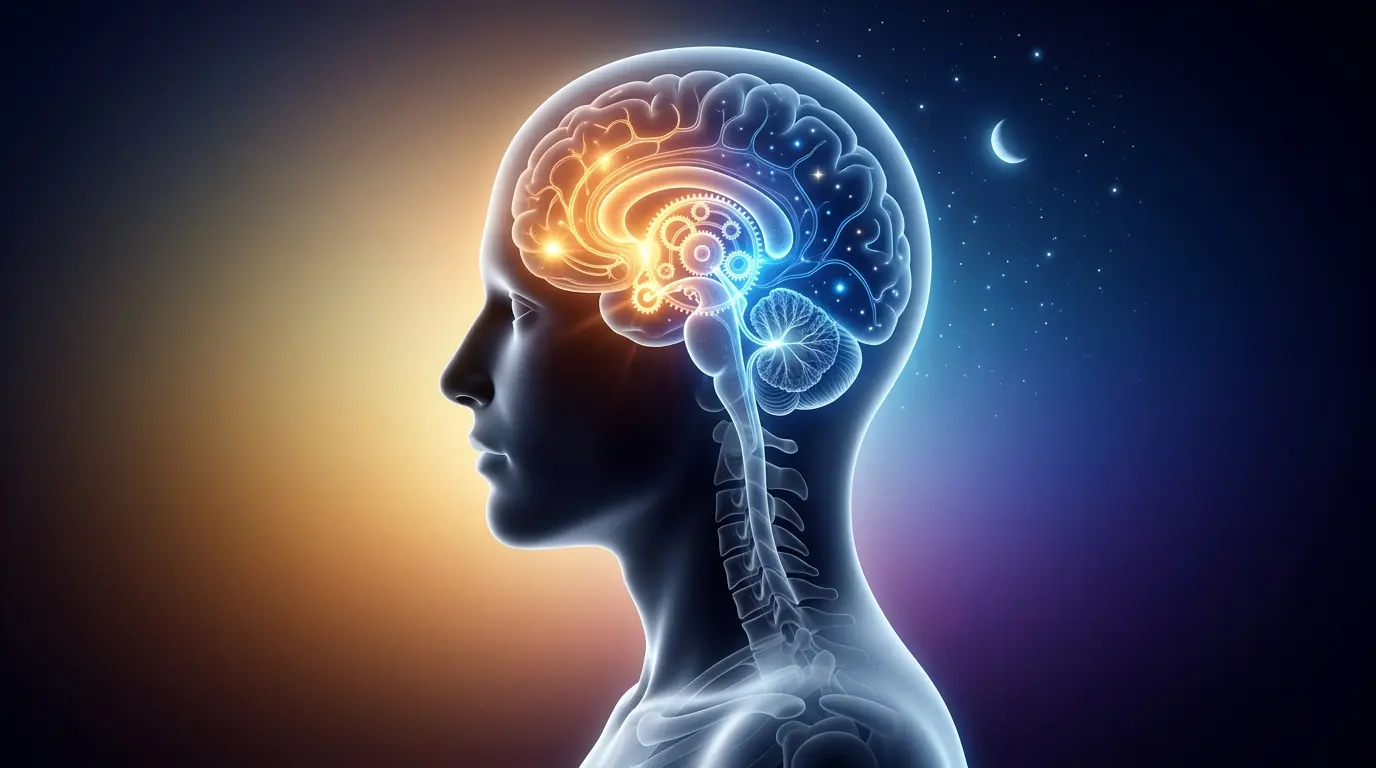
Have you ever wondered why your body instinctively feels drowsy at night and wakes with renewed energy as daylight breaks? This fundamental biological rhythm is orchestrated by the circadian cycle—an internal 24-hour oscillation governing cellular physiology, endocrine secretion, and metabolism across nearly all living organisms. At the core of this nocturnal synchronization operates melatonin, a pleiotropic neuroendocrine hormone widely characterized as the chemical messenger of darkness.
The Suprachiasmatic Nucleus: Master Pacemaker of the Brain
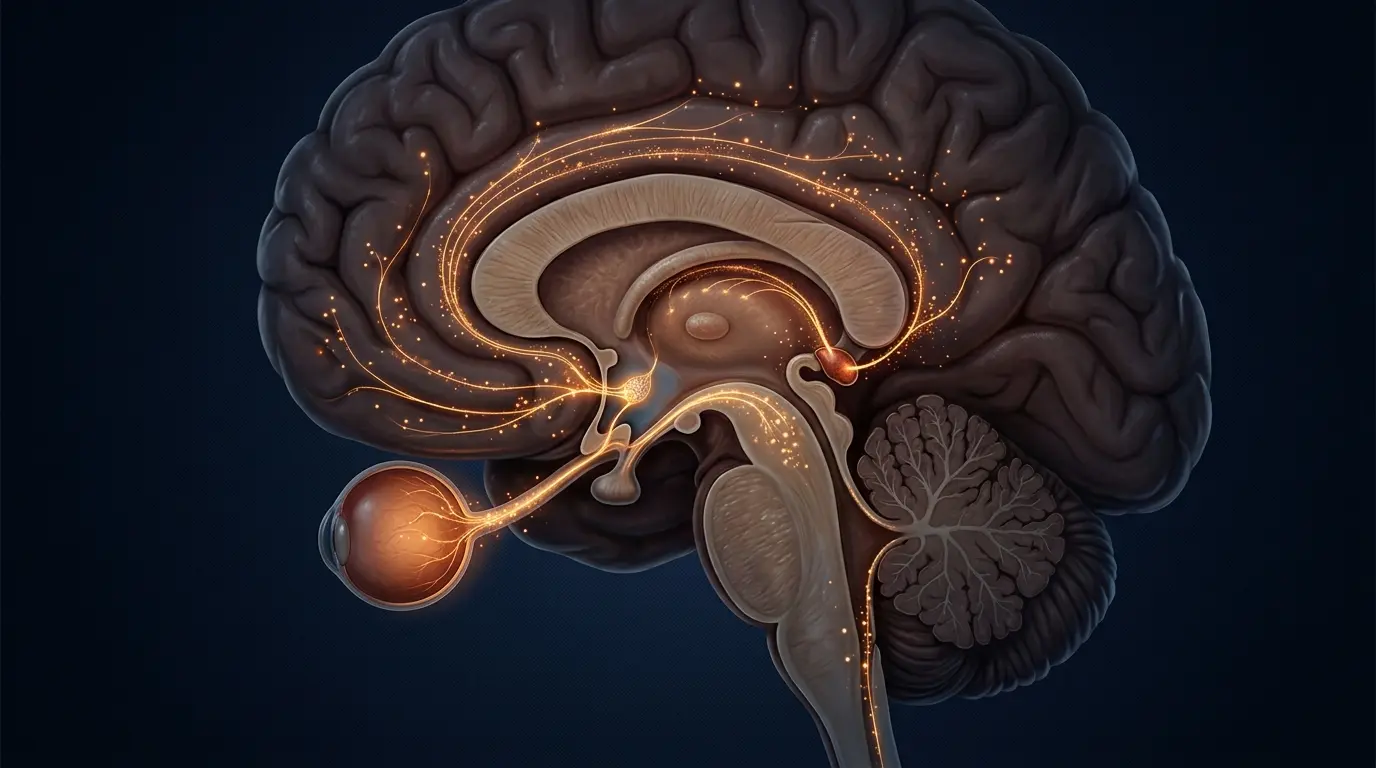
Deep within the anterior hypothalamus, directly situated above the optic chiasm, lies the suprachiasmatic nucleus (SCN). Composed of approximately 20,000 specialized neurons, the SCN acts as the master circadian pacemaker of the human body. The molecular transcriptional-translational feedback loops directing this cellular clock—involving PER and TIM clock proteins—earned researchers Jeffrey C. Hall, Michael Rosbash, and Michael W. Young the 2017 Nobel Prize in Physiology or Medicine. The SCN receives direct photic input from the retina via the retinohypothalamic tract, harmonizing internal biochemistry with the solar cycle.
The Pineal Gland and the Biosynthesis of Melatonin
Photic environmental cues are detected by intrinsically photosensitive retinal ganglion cells (ipRGCs) expressing the photopigment melanopsin. As ambient evening light dims, the SCN relieves inhibitory signals, dispatching multisynaptic neural impulses through the cervical sympathetic pathway to the pineal gland. Situated near the anatomical center of the brain, the pineal gland synthesizes melatonin from the dietary amino acid L-tryptophan through a serotonin intermediate, controlled by the rate-limiting enzyme arylalkylamine N-acetyltransferase (AANAT).
Key Scientific Facts Regarding Melatonin Secretion
Modern chronobiological literature highlights several foundational characteristics of melatonin dynamics:
- Dim Light Melatonin Onset (DLMO): Melatonin production starts rising roughly two hours before habitual sleep onset, typically beginning between 8:00 PM and 9:00 PM in standard adult chronotypes.
- Peak Nocturnal Acrophase: Plasma melatonin levels reach peak concentration during the deep dark phase, typically between 2:00 AM and 4:00 AM, before plummeting sharply prior to morning awakening.
- Chronobiotic Rather Than Sedative: Melatonin does not forcibly tranquilize brain circuits; rather, it functions as a biological clock-setter that lowers core body temperature and initiates systemic sleep preparedness.
- Antioxidant and Cytoprotective Properties: Beyond circadian entrainment, melatonin readily crosses cellular membranes and the blood-brain barrier, directly scavenging free radicals and preserving mitochondrial integrity from oxidative damage.
Blue Light Pollution and Circadian Disruption
"Light represents the most potent environmental zeitgeber; nocturnal exposure to blue wavelengths abruptly suppresses pineal melatonin secretion and delays biological sleep onset."
Nocturnal exposure to artificial short-wavelength blue light (460–480 nm) from smartphones, computer screens, and LED fixtures strongly triggers melanopsin in ipRGCs. Consequently, the SCN registers a false daylight cue, immediately attenuating melatonin release and provoking circadian phase delays. Chronic desynchronization of this axis correlates with impaired metabolic regulation, persistent insomnia, reduced cognitive performance, and elevated cardiovascular strain.
Restoring Biological Harmony for Optimal Health
Honoring circadian neurobiology underscores the clinical necessity of disciplined sleep hygiene. Exposing your eyes to natural morning sunlight and minimizing artificial evening blue light preserves endogenous melatonin rhythmicity, supporting restorative deep sleep architecture and long-term vitality.