
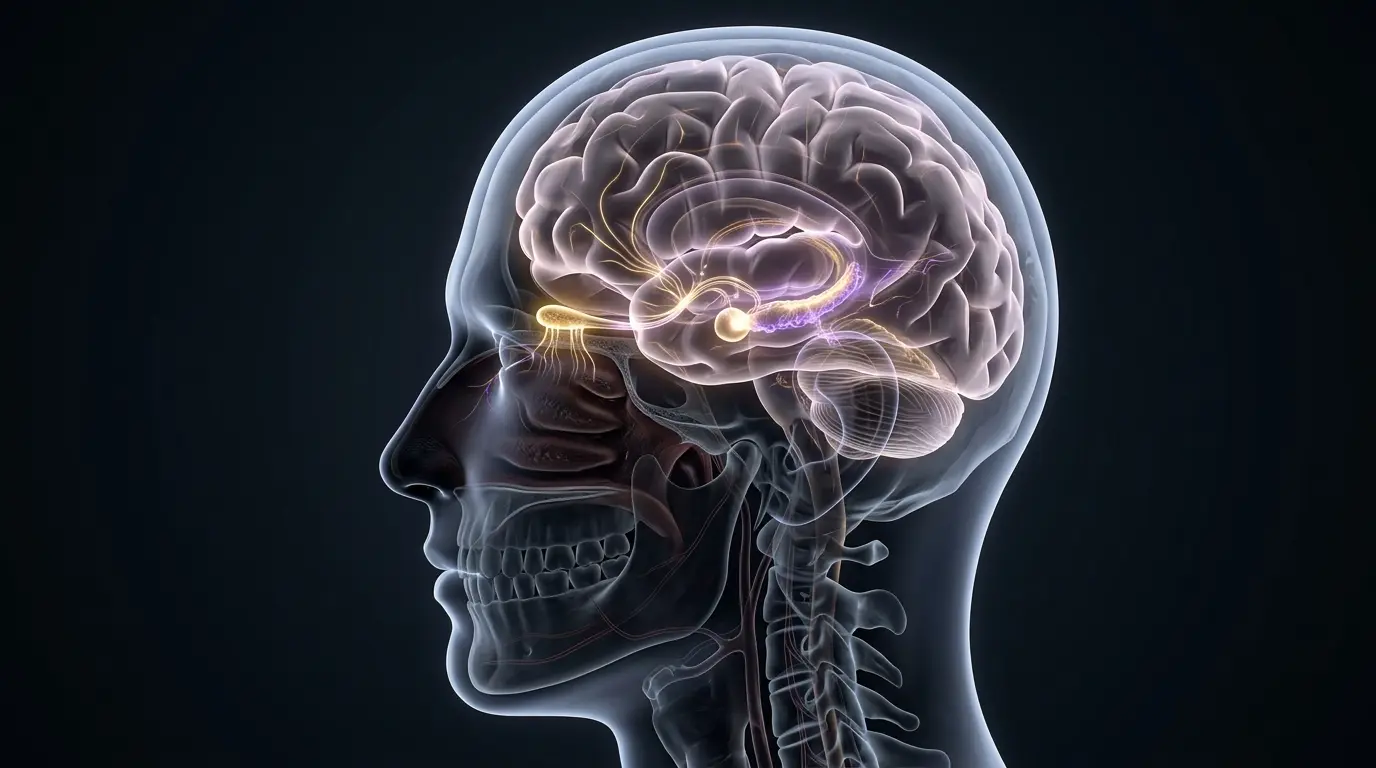
The Mystery of Scent and Vivid Memories
Have you ever caught a whiff of freshly baked bread, an old bottle of perfume, or damp soil after rain and felt instantly transported to a childhood moment from decades ago? In cognitive psychology, this phenomenon of smell-triggered nostalgia is known as the Proust phenomenon (or Proustian memory). But why does our sense of smell hold such an extraordinary power to unlock vivid, deeply emotional memories compared to sights or sounds?
The answer lies in the unique neuroanatomy of the human brain, specifically how the olfactory system connects directly to our emotional core without passing through the brain's primary sensory gatekeeper.
An Unmatched Sensory Highway: Bypassing the Thalamus
For nearly all our senses—vision, hearing, touch, and taste—sensory input travels an indirect pathway. Signals must first journey to the thalamus, an egg-shaped structure at the center of the brain that functions as a sensory relay switchboard. The thalamus filters, prioritizes, and routes incoming data to high-level cortical areas for conscious evaluation.
Olfaction, however, is a remarkable evolutionary exception. The olfactory pathway completely bypasses the thalamus in its initial processing stages:
- Nasal Receptors: Volatile airborne molecules bind to specialized sensory receptors lining the olfactory epithelium high inside the nasal cavity.
- Olfactory Bulb: Electrical impulses travel through the porous cribriform plate straight to the olfactory bulb at the base of the forebrain.
- Direct Limbic Projections: From the olfactory bulb, the olfactory tract sends projections directly into ancient brain structures responsible for emotion and memory.
Direct Connections to the Amygdala and Hippocampus
Immediately after leaving the olfactory bulb, neural signals reach the piriform cortex and two vital structures of the limbic system:
First, impulses reach the amygdala, an almond-shaped cluster of nuclei that governs primal emotions such as fear, pleasure, threat appraisal, and emotional salience. Because of this immediate anatomical wiring, a scent can trigger an emotional response before your conscious neocortex even deduces what the smell is.
Second, signals project directly into the hippocampus and entorhinal cortex, key regions dedicated to the consolidation and retrieval of long-term episodic and autobiographical memories. Because the amygdala and hippocampus process incoming olfactory cues simultaneously, scents become indelibly interwoven with emotional context.
The privileged anatomical link between the olfactory bulb, amygdala, and hippocampus allows scents to evoke autobiographical memories with significantly greater emotional intensity than visual or auditory cues.
Evolutionary Origins and Psychological Power
From an evolutionary perspective, this direct neural shortcut served as a fundamental survival mechanism. Detecting smoke from an encroaching wildfire, poisonous food, or the scent of a predator demanded an instantaneous behavioral and emotional response. Pausing for slower cortical analysis could prove fatal; survival prioritized immediate emotional reaction over deliberative thought.
Modern neuroscience demonstrates that odor-evoked memories typically originate from the first decade of life and demonstrate remarkable emotional durability over time. An antique perfume is far more than a pleasant fragrance—it serves as a direct biological key that unlocks the emotional archives of our personal history.