Unveiling Mycorrhizal Networks: The Forest's Underground Grid
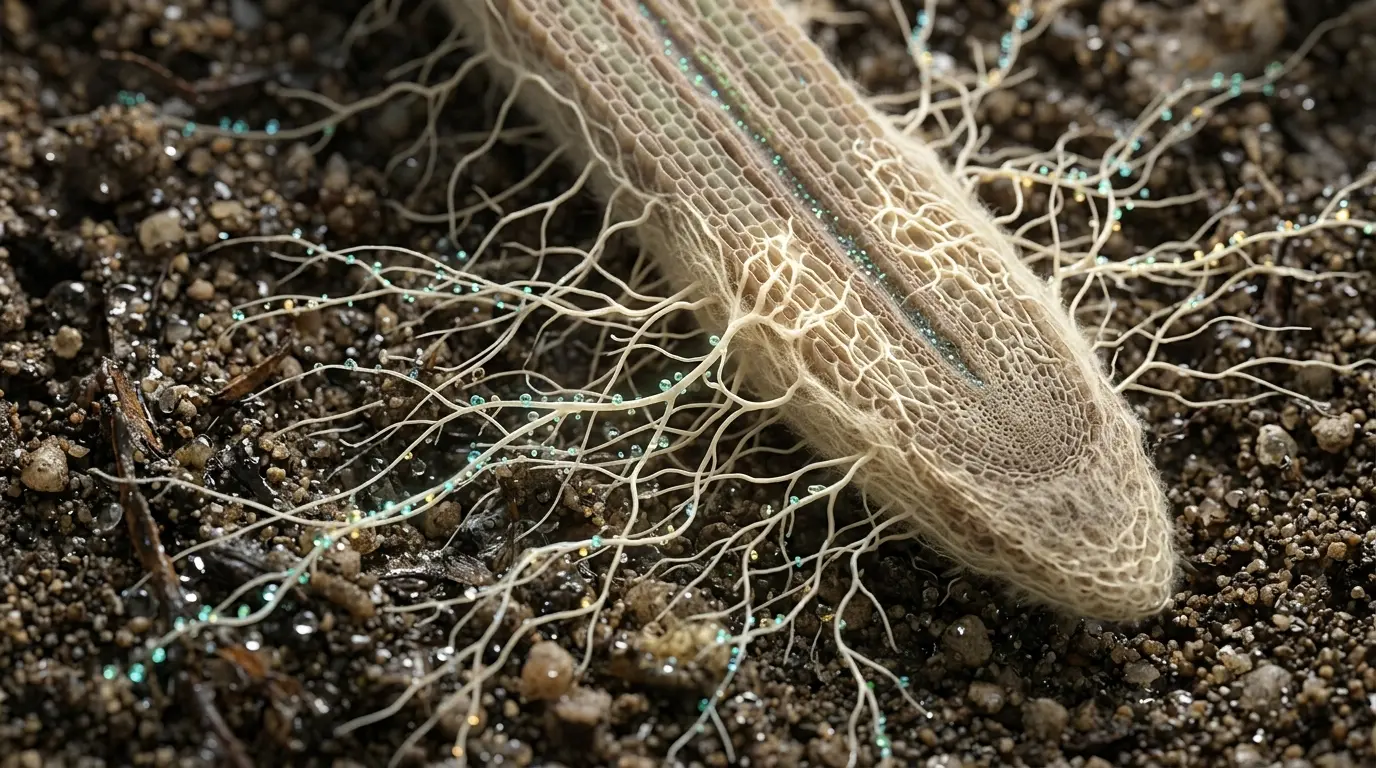
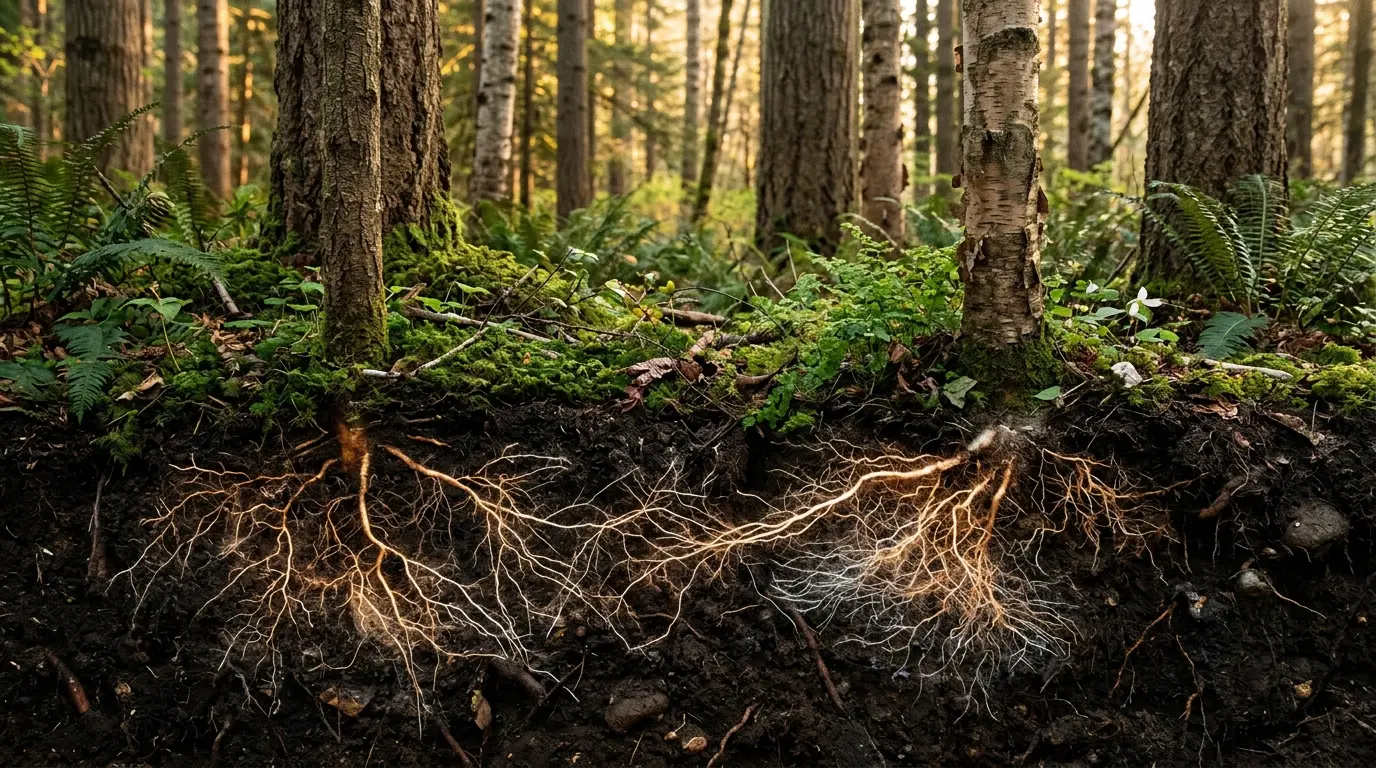
Beneath the quiet floor of a natural forest lies an exceptionally dynamic biological infrastructure. Microscopic fungal filaments, known as hyphae, weave through soil particles to interconnect the root systems of different trees, forming what ecologists call a Common Mycorrhizal Network (CMN). This ancient mutualistic partnership has evolved over hundreds of millions of years, enabling forest vegetation to link together beneath the earth.
Etymologically derived from the Greek words mykes (fungus) and rhiza (root), this symbiosis operates on reciprocal resource exchange. Fungi efficiently harvest water and scarce minerals—particularly phosphorus and nitrogen—from tight soil micropores and deliver them to tree roots. In return, trees allocate approximately 20 to 30 percent of their photosynthetically fixed carbon and lipids to nurture the fungal mycelium.
Resource Sharing and Biochemical Alarm Systems
By bridging multiple individual trees simultaneously, mycorrhizal networks serve as a functional subterranean pipeline with two critical ecological roles:
- Nutrient and Carbon Reallocation: Canopy-dominant trees basking in full sunlight can export surplus carbon compounds across the fungal network to understory seedlings shaded by dense leaves. This subsidization provides vital metabolic support, significantly boosting seedling survival and regeneration rates.
- Defense Priming and Early Warning Signals: When a tree experiences infestation by insect herbivores or foliar pathogens, it mobilizes biochemical infochemicals into the common mycorrhizal network. Neighboring unattacked trees detect these systemic underground signals and preemptively synthesize defensive enzymes and volatile organic deterrents before pests arrive.
A landmark 1997 field study led by Dr. Suzanne Simard and published in Nature used carbon isotopes to confirm bidirectional carbon transfer between Douglas-fir and paper birch trees linked by mycorrhizal fungi in undisturbed forest conditions.
Scientific Nuance: Distinguishing Metaphor from Biology
The popularization of the term "Wood Wide Web" has frequently inspired romantic notions that trees possess conscious intentions or intentional altruism. Contemporary ecology, however, explains these interactions through evolutionary biology and biological market theory. Fungi do not act out of altruistic generosity; rather, they regulate resource pathways as self-interested organisms preserving their best carbon-yielding partners.
Furthermore, a comprehensive 2023 review led by Dr. Justine Karst in Nature Ecology & Evolution emphasized the necessity of scientific rigor against overinterpreting findings. While the physical transfer of chemical signals and carbon via fungal hyphae is thoroughly verified under controlled conditions, its overall net impact across varied mature forest biomes remains an active and nuanced field of study.
Implications for Forest Conservation
Deciphering mycorrhizal networks fundamentally reshapes sustainable forestry. A forest is not merely a collection of isolated timber units competing in a vacuum, but an integrated, cooperative subterranean landscape. Conventional clear-cutting and heavy machinery severely fragment these delicate fungal threads, drastically degrading the ecosystem's innate capacity to withstand environmental stress and climate shifts.