The Hidden Life Beneath the Forest Floor
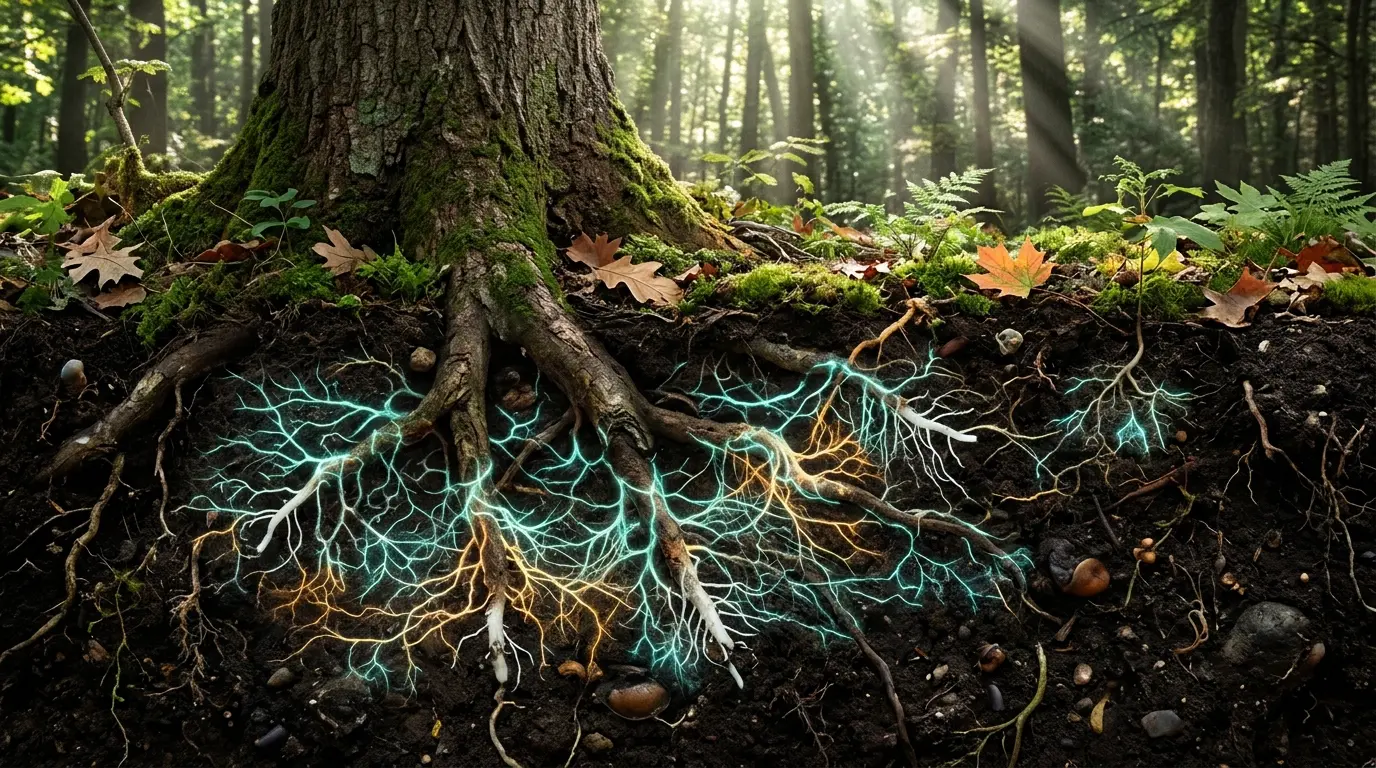
Beneath the peaceful canopy of mature woodlands lies an intricate, dynamic subterranean network. Trees and understory saplings do not exist solely as isolated competitors fighting for light and space. Instead, they are physically intertwined through an expansive subterranean biological infrastructure known as common mycorrhizal networks (CMNs). Often popularized in media as the “Wood Wide Web,” this subterranean system plays a fundamental role in forest ecology.
The Symbiotic Architecture of Roots and Fungi
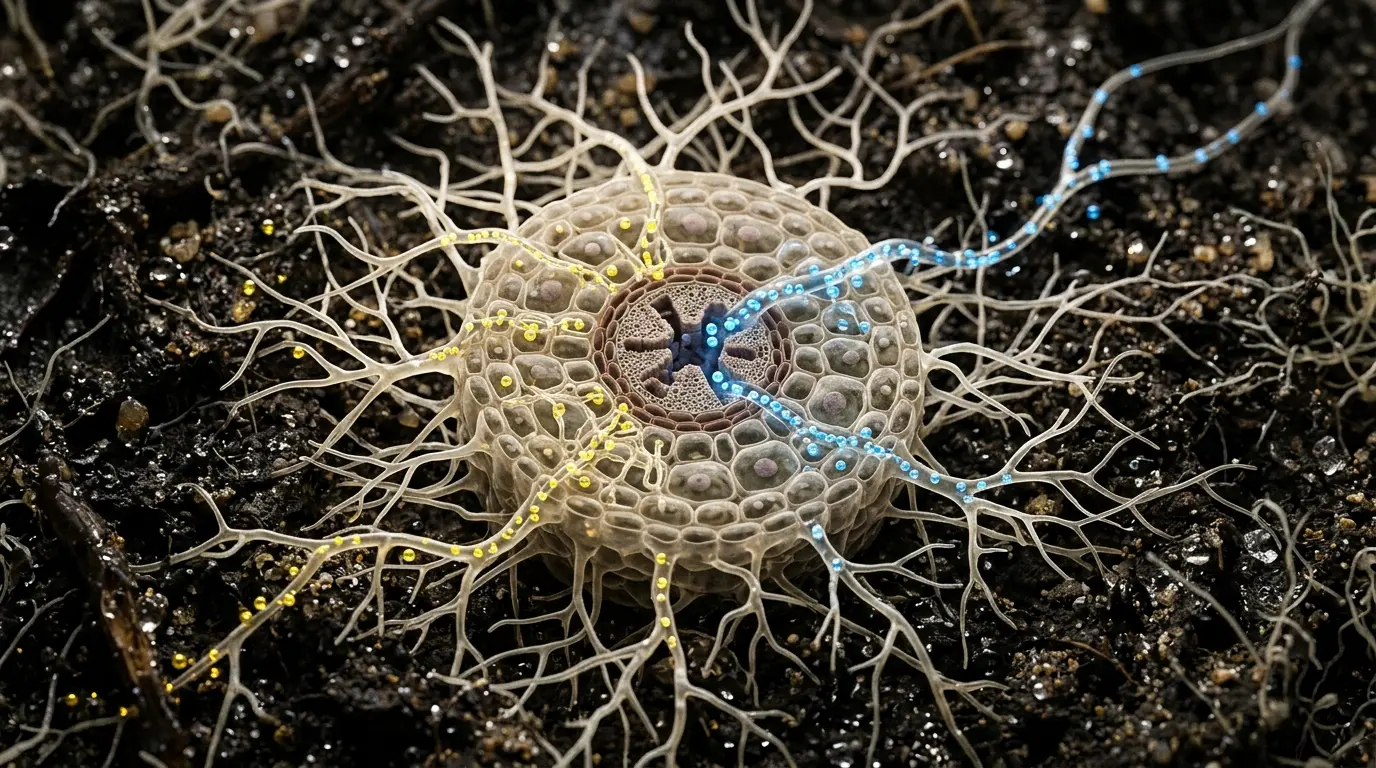
A mycorrhiza is a mutualistic symbiotic association between microscopic fungal filaments (mycelial hyphae) and plant root systems. In temperate and boreal forests, two primary structures dominate: ectomycorrhizae, where hyphae form a mantle around root tips, and arbuscular mycorrhizae, where microscopic fungal structures penetrate inside root cortical cells. Because fungal hyphae are significantly thinner and more pervasive than plant root hairs, they can access inaccessible soil micropores to absorb essential water, phosphorus, and nitrogen.
In exchange, host trees allocate approximately 20 to 30 percent of their photosynthesized carbohydrates (mainly sucrose and glucose) to fuel their fungal partners. Because individual fungal mycelia colonize root systems of multiple adjacent trees, they establish a living bridge linking diverse species beneath the forest soil.
How Nutrients and Warning Signals Move Underground
This shared mycelial web serves as an active biochemical conduit for resources and ecological information across the plant community:
- Carbon and Nutrient Transfer: Groundbreaking field experiments conducted in 1997 by Dr. Suzanne Simard demonstrated bidirectional carbon transfer between Douglas-fir (Pseudotsuga menziesii) and paper birch (Betula papyrifera) using carbon-13 and carbon-14 isotope tracking. The directional flow of carbon followed a source-to-sink gradient, surging toward seedlings shaded from sunlight.
- Insect Pest Early-Warning Signals: Laboratory research led by Zdenka Babikova in 2013 revealed that aphid infestations on one plant trigger defense signals transmitted across common mycorrhizal networks. Uninfested neighboring plants connected solely by fungal hyphae detected these signals, rapidly releasing airborne volatile organic compounds that repel aphids and attract predatory parasitoid wasps.
“Mycorrhizal fungal networks function as subterranean biochemical conduits that facilitate nutrient redistribution and early stress signaling across forest canopies.”
Scientific Nuance: Distinguishing Evidence from Anthropomorphism
While concepts like “talking trees” and forestwide altruism have captured popular fascination, contemporary ecologists urge precision over poetic anthropomorphism. A comprehensive critical review by Dr. Justine Karst, Melanie Jones, and Jason Hoeksema published in Nature Ecology & Evolution (2023) highlighted the necessity of separating rigorous field evidence from exaggerated narrative claims.
Resource transfers through fungal hyphae are driven by physical concentration gradients, source-sink dynamics, and fungal metabolic self-interest, rather than intentional parental care or conscious cooperation between trees. Fungi actively allocate carbon and mineral resources to preserve their own photosynthetic carbohydrate suppliers.
Ecological Value for Forest Conservation
Regardless of metaphorical debates, protecting mycorrhizal networks is essential for modern forestry and habitat preservation. Industrial practices such as intensive clear-cutting, excessive pesticide usage, and heavy soil compaction disrupt fragile mycelial networks that take decades to establish. Preserving underground soil integrity and retaining mature legacy trees during reforestation are critical steps toward sustaining forest resilience against global climate challenges.