Unveiling Earth’s Most Resilient Micro-Animal
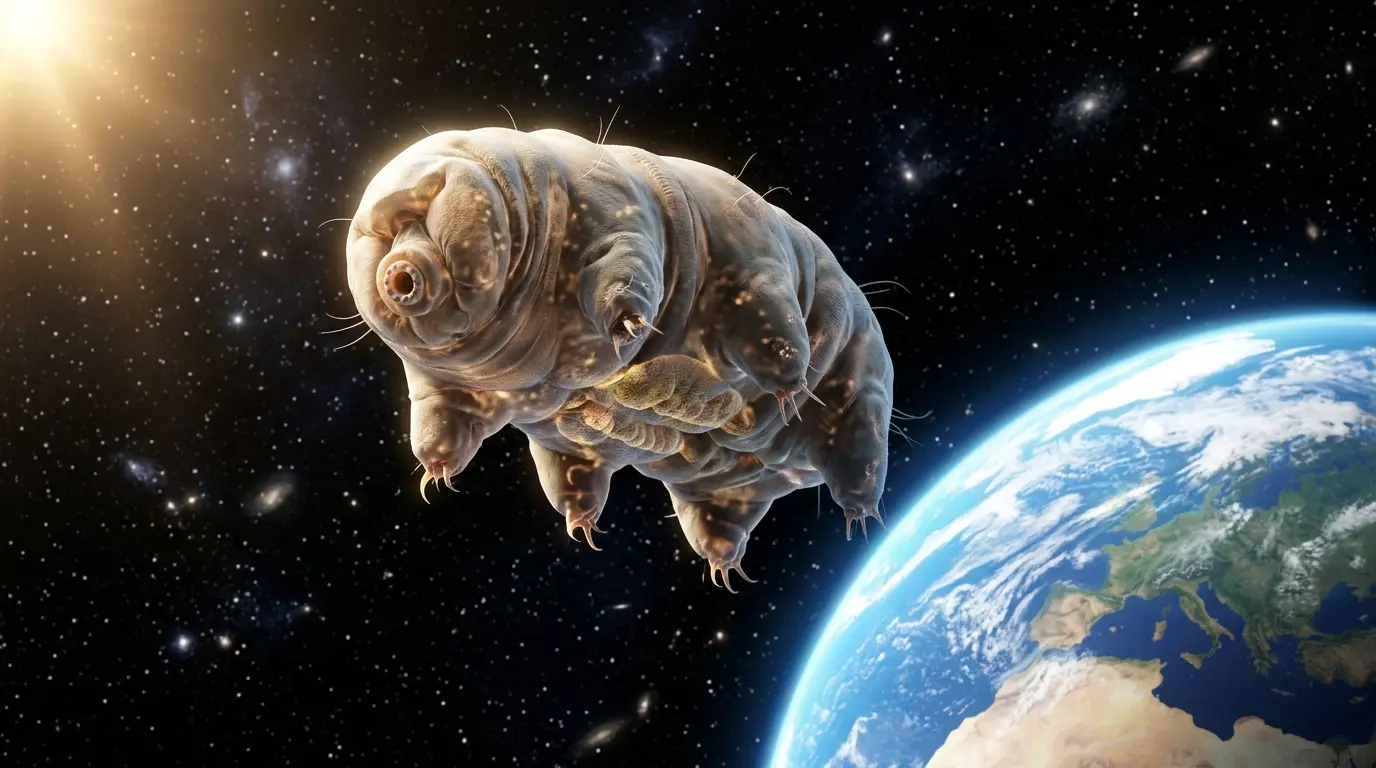
Measuring less than a single millimeter in length, tardigrades—affectionately known as "water bears"—sound like organisms straight out of science fiction. These microscopic invertebrates have long captivated evolutionary biologists with their ability to withstand near absolute zero temperatures (-272°C), boiling heat above 150°C, and hydrostatic pressures far exceeding the ocean's deepest trenches. Yet their ultimate survival test came when researchers placed them in the most unforgiving environment imaginable: the open vacuum of outer space.
The Historic TARDIS Mission: Pushing Biological Boundaries
In September 2007, the European Space Agency (ESA) launched the unmanned FOTON-M3 capsule aboard a Soyuz rocket from the Baikonur Cosmodrome. Integrated within the external BIOPAN-6 payload was an experiment called TARDIS (Tardigrades in Space), designed by an international research team headed by Dr. K. Ingemar Jönsson from Kristianstad University in Sweden. The primary goal was to determine whether multicellular animals could survive direct exposure to the vacuum and ionizing space radiation in low Earth orbit for 12 days.
Scientists selected two robust tardigrade species for the mission: Milnesium tardigradum and Richtersius coronifer, both launched in a desiccated, dormant state.
Groundbreaking Findings from Low Earth Orbit
When the FOTON-M3 capsule returned to Earth and the specimens were rehydrated with water, the scientific community was stunned by their resilience. Key experimental findings demonstrated unprecedented biological hardiness:
- Immunity to Space Vacuum: Tardigrades exposed exclusively to the space vacuum and shielded from direct sunlight exhibited exceptional survival rates, with over 68% of Milnesium tardigradum reviving within 30 minutes of rehydration.
- Preserved Reproductive Capacity: The vacuum-exposed survivors did not merely wake up and walk around; they reproduced normally and laid eggs that hatched into healthy offspring.
- The Solar UV Radiation Limit: The vacuum itself proved remarkably harmless to the animals. The true lethal boundary was unfiltered solar ultraviolet (UV) radiation. While some survived UV-A and UV-B exposure, full-spectrum solar UV inflicted severe DNA damage that only a tiny fraction endured.
"The TARDIS experiment marked the first time in scientific history that any multicellular animal survived open exposure to the lethal vacuum of space."
The Biological Shield: The Tun State and Vitrification
How can an animal survive zero pressure, rapid evaporation, and cosmic radiation? The secret lies in a form of cryptobiosis known as anhydrobiosis.
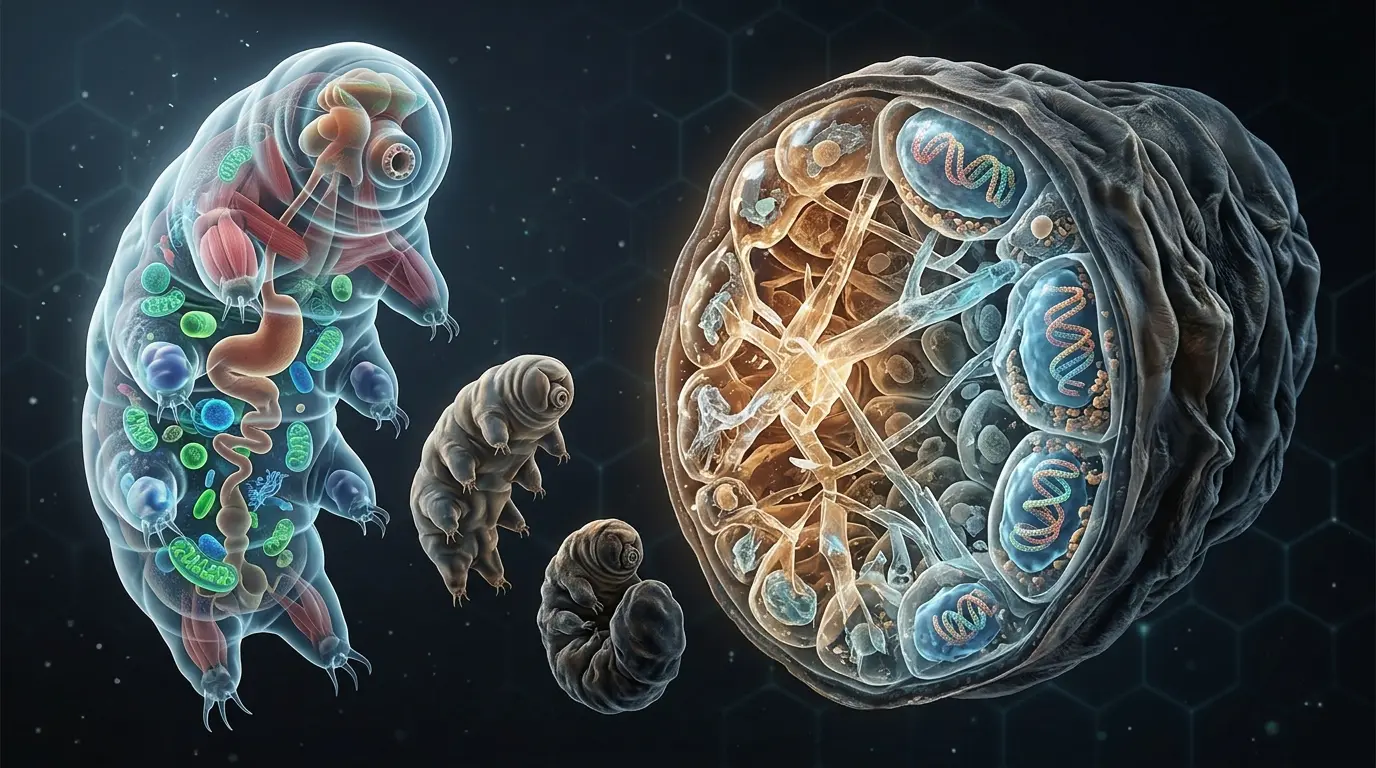
When environmental moisture disappears, a tardigrade retracts its head and eight legs, shrinking into a compact barrel configuration termed the tun state. During this phase:
- The organism loses more than 98% of its bodily water, lowering metabolic activity to undetectable, suspended levels.
- Cells produce specialized tardigrade intrinsically disordered proteins (TDPs). These molecules undergo vitrification, solidifying into an amorphous, biological glass that mechanically shields cell membranes and vital proteins from collapse.
- Upon rehydration, the animal mobilizes specialized DNA repair enzymes to rapidly mend single- and double-strand chromosome breaks accumulated during exposure.
Profound Implications for Astrobiology
The remarkable survival of tardigrades in space reshapes modern astrobiology and lends empirical weight to the panspermia hypothesis—the idea that microscopic life forms could theoretically travel between celestial bodies. Deciphering these miniature survivors' protective mechanisms not only expands our definition of habitability, but also offers groundbreaking insights for stabilizing vaccines, preserving human cells, and engineering resilient crop systems.