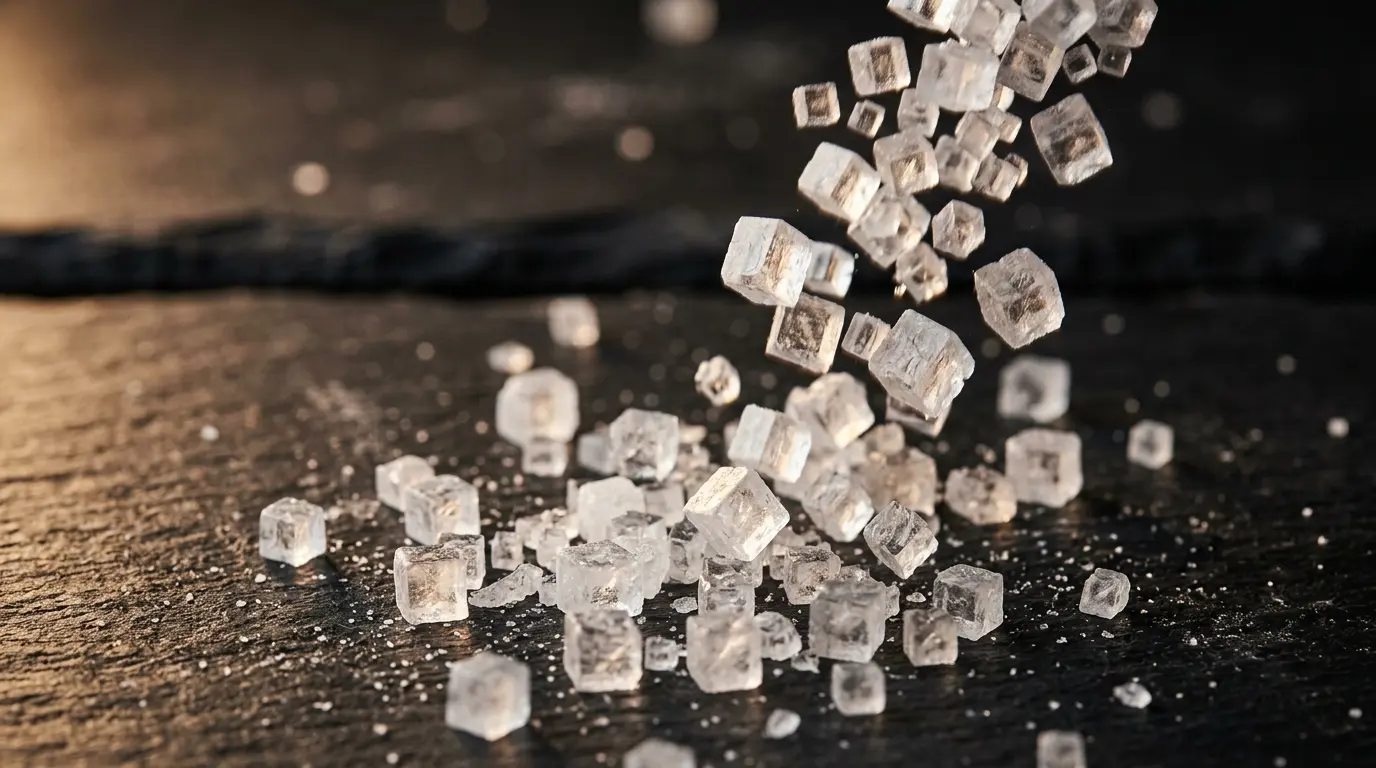
Have you ever wondered why a pinch of salt turns a flat, watery broth into a rich and savory soup, or why pastry chefs routinely add salt to caramel and chocolate cookies? Common table salt (sodium chloride, or NaCl) is far more than a simple culinary condiment. From the standpoints of food biochemistry and solution thermodynamics, salt acts as a versatile molecular flavor modulator that fundamentally reshapes how both our tongue receptors and olfactory nerves perceive food.
Distinguishing Taste from Flavor
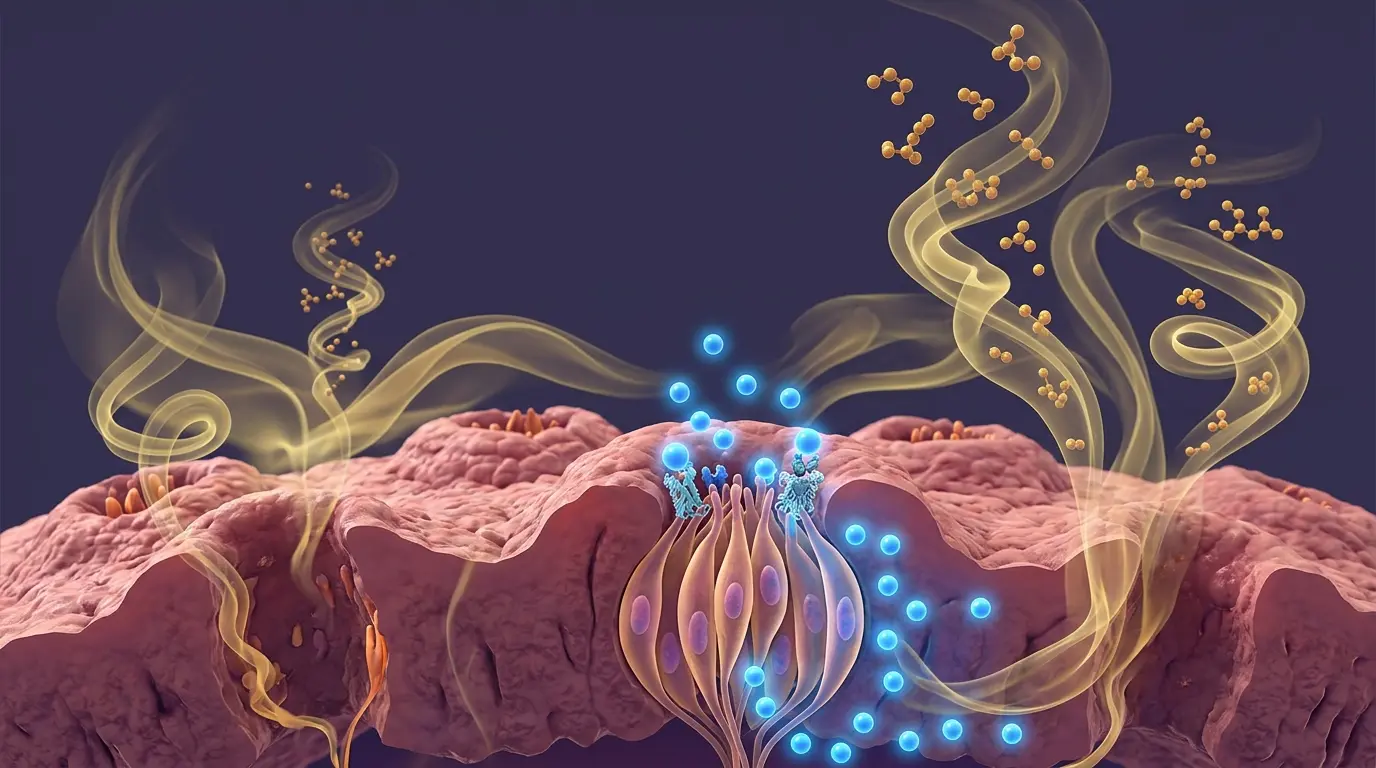
To grasp the chemical prowess of salt, one must first distinguish taste from flavor. Basic taste refers strictly to the five primary sensations detected by taste receptor cells on the tongue: sweet, salty, sour, bitter, and umami. Flavor, by contrast, is a composite multisensory perception combining oral taste, physical texture, and volatile aromatic compounds traveling retro-nasally through the pharynx during mastication. Salt enhances culinary enjoyment by targeting both physiological taste transduction and physical aroma release.
1. Selective Bitterness Suppression (The Breslin-Beauchamp Effect)
A landmark breakthrough in sensory biophysics was published by Paul Breslin and Gary Beauchamp in 1997 in the journal Nature. Their experiments demonstrated that sodium cations (Na+) exhibit selective taste filtering. Sodium selectively suppresses bitter tastes on the tongue far more effectively than it suppresses sweetness or acidity.
Many complex foods naturally harbor bitter compounds, such as polyphenols in dark chocolate, tannins in coffee, or glucosinolates in brassica vegetables. By dampening the bitter sensory input at the peripheral receptor level, sodium unmasks the inherent sweetness, acidity, and savory dimensions of the ingredients. A minute amount of salt thereby rebalances a dish's flavor profile without imparting any noticeable salty taste.
2. The Physical Chemistry of the Salting-Out Effect
Salt’s most pronounced physicochemical contribution occurs via a thermodynamic phenomenon known as the salting-out effect. When table salt dissolves in the aqueous phase of food, the dissociated Na+ and Cl- ions bind tightly to surrounding water dipoles through ionic hydration.
This preferential hydration drastically lowers the quantity of free water molecules available to dissolve hydrophobic organic compounds—the volatile organic molecules responsible for food aromas. As a consequence, these aroma compounds are thermodynamically forced out of the liquid phase into the headspace of the oral cavity. During chewing and swallowing, these released volatiles rise into the nasal cavity, activating olfactory receptors and producing a vivid surge in aroma intensity.
3. Cellular Receptor Modulation
At the cellular membrane level, sodium ions interact directly with specialized transporter proteins and taste receptors to enhance neural signaling to the brain.
Dual Sweet Activation via SGLT1
Researchers at the Monell Chemical Senses Center identified the presence of SGLT1 (Sodium-Glucose Cotransporter 1) on sweet-sensitive taste cells. SGLT1 requires sodium ions to transport glucose into taste receptor cells. Working in tandem with the canonical T1R2+T1R3 sweet receptor dimer, sodium co-activation accelerates cell depolarization, explaining why a pinch of salt measurably elevates the perceived sweetness of ripe fruit and baked desserts.
Umami Potentiation
Sodium ions also electrostatically stabilize the binding pocket of the umami receptor heterodimer (T1R1+T1R3) when free glutamate is present. This ionic synergy deepens the intensity and lingering persistence of savoriness across the palate.
Salt does not merely add saltiness; it acts as a universal chemical lens that suppresses harsh bitterness, amplifies sweetness, and releases trapped volatile aromas into our sensory apparatus.