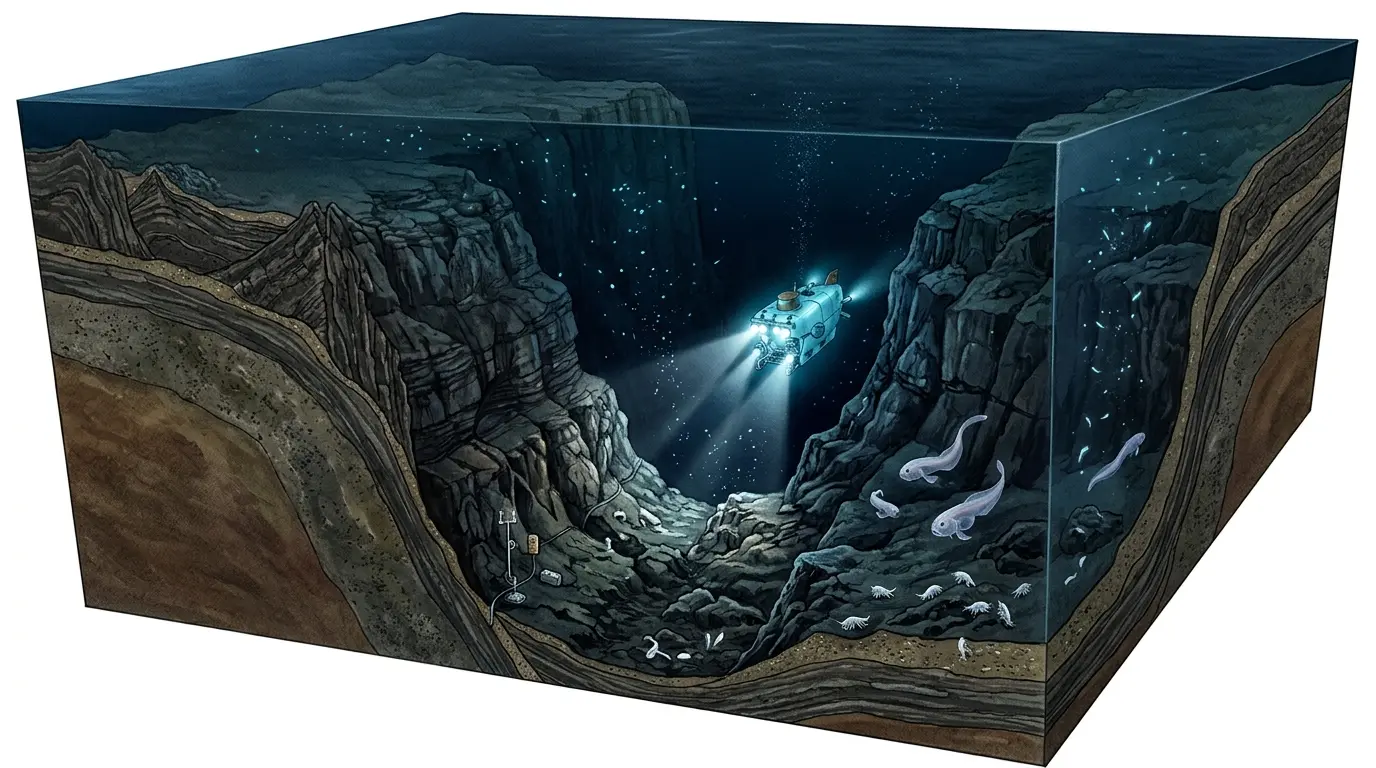
Lying deep beneath the western Pacific Ocean is the Mariana Trench, a colossal tectonic scar plunging nearly 11,000 meters down. Its deepest point, Challenger Deep, reaches approximately 10,994 meters below sea level. This trench occupies the hadal zone—plunging far deeper than the abyssal zone (3,000 to 6,000 meters). In this extreme realm, extraordinary life thrives under conditions once deemed completely incompatible with survival.
The Extreme Environment of Earth's Deepest Chasm
Conditions in the Mariana Trench are shaped by three formidable factors: crushing hydrostatic pressure, perpetual darkness (the aphotic zone), and near-freezing temperatures hovering between 1°C and 4°C. At depths reaching 11 kilometers, water pressure exceeds 1,000 atmospheres (roughly 110 megapascals or 15,000 pounds per square inch)—equivalent to supporting the weight of an automobile on a single square centimeter. Such intense pressure ordinarily dismantles cellular membranes and denatures critical enzymes.
Biochemical Adaptations: The Molecular Shield
Rather than resisting hydrostatic pressure, deep-sea organisms harmonize their internal cellular biology with their surroundings. Marine biologists have unraveled several key molecular adaptations:
- Trimethylamine N-oxide (TMAO): This vital piezolyte molecule acts as a chemical chaperone, preventing water molecules from distorting vital protein complexes. Research led by Dr. Paul Yancey revealed that TMAO concentrations increase linearly with depth, establishing a physiological depth boundary for teleost fish around 8,400 meters.
- Unsaturated Fatty Acid Membranes: Deep-sea cellular membranes are packed with polyunsaturated fatty acids (PUFAs). This biochemical arrangement maintains essential membrane fluidity, preventing cellular walls from solidifying in cold, pressurized water.
- Absence of Gas Bladders: Hadal organisms lack gas-filled swim bladders, which would violently collapse under deep hydrostatic pressure. Instead, they utilize gelatinous, water-rich flesh with neutral buoyancy.
Iconic Inhabitants of the Hadal Depths
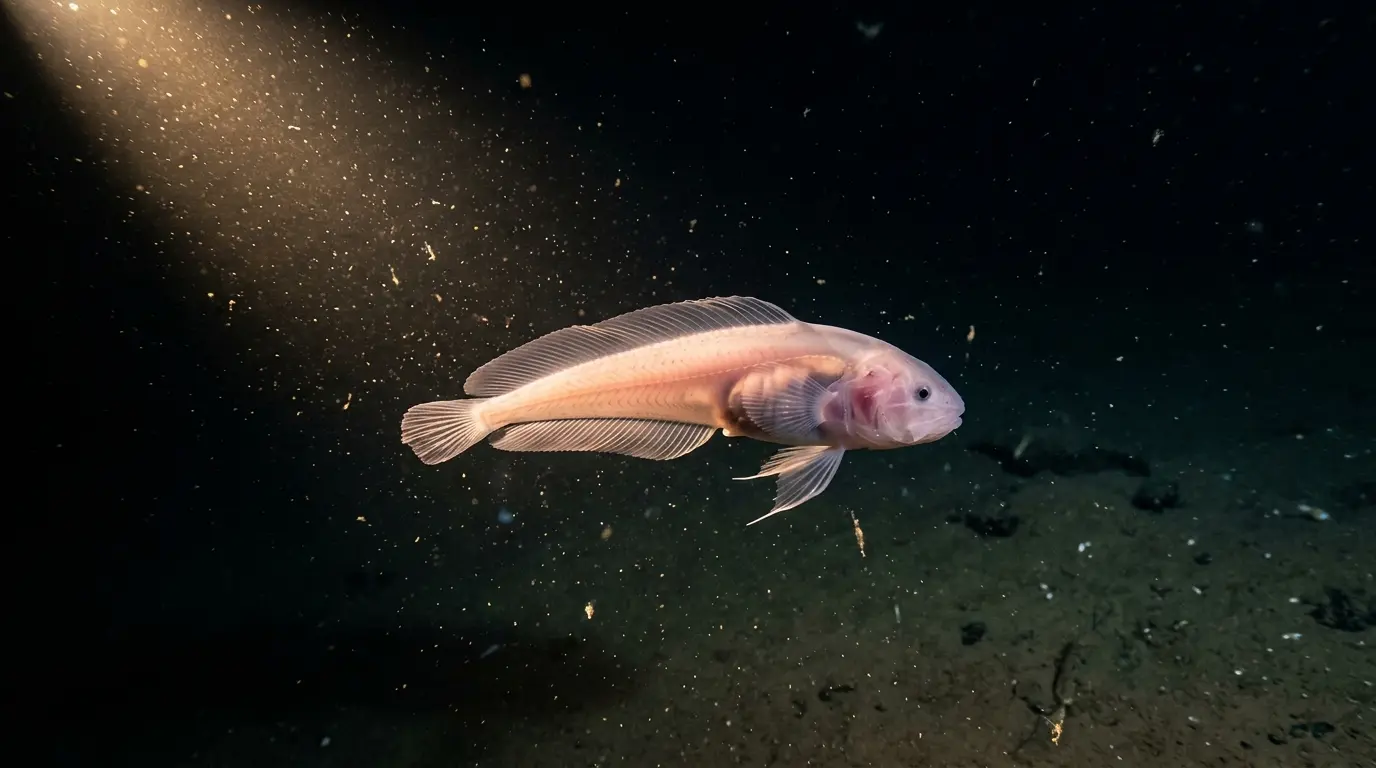
Among the apex predators of this abyssal abyss is the Mariana snailfish (Pseudoliparis swirei), documented thriving at depths exceeding 8,000 meters. This creature possesses scaleless, translucent skin, an uncalcified and flexible cartilaginous skull, and soft connective tissues engineered to bend rather than fracture.
Deeper still, scavenging hadal amphipods such as Hirondellea gigas dominate the floor of Challenger Deep. These crustaceans produce specialized cellulase enzymes capable of digesting sunken plant debris and synthesize an aluminum-infused organic gel that protects their exoskeleton against calcium dissolution.
"Life in the Mariana Trench demonstrates that the physical limits of biology are remarkably more resilient than science once imagined."
The Broader Value of Hadal Research
Investigating the adaptations of abyssal and hadal fauna yields far more than academic wonder. Pressure-resistant enzymes and piezolytes offer transformative insights for biomedical pharmacology, protein preservation, and astrobiological models studying potential life in the subsurface oceans of icy moons like Europa and Enceladus.