Introduction: Nature's Blueprint for Immune Defense
Messenger RNA (mRNA) vaccines represent a transformative breakthrough in immunology and modern preventive medicine. Unlike traditional vaccine platforms that inject weakened, attenuated, or inactivated whole pathogens, mRNA vaccines operate by delivering transient genetic instructions directly to host cells. This molecular blueprint trains the human immune system to identify and neutralize specific pathogen targets without any risk of causing active disease.
Lipid Nanoparticle Delivery: Protecting Fragile Molecules
In its native form, naked mRNA is inherently unstable, negatively charged, and susceptible to rapid enzymatic degradation by extracellular ribonucleases (RNases). To safeguard these delicate genetic instructions, scientists encapsulate the mRNA within specialized lipid nanoparticles (LNPs).
Dual Roles of the Lipid Vehicle
This four-component lipid carrier performs two vital biological functions:
- Shields the mRNA strand from enzymatic breakdown and early elimination by the non-specific innate immune response.
- Facilitates cellular entry by fusing with the target cell's lipid bilayer membrane via endocytosis, successfully releasing mRNA into the cytosol.
Cytoplasmic Translation Without Altering Genomic DNA
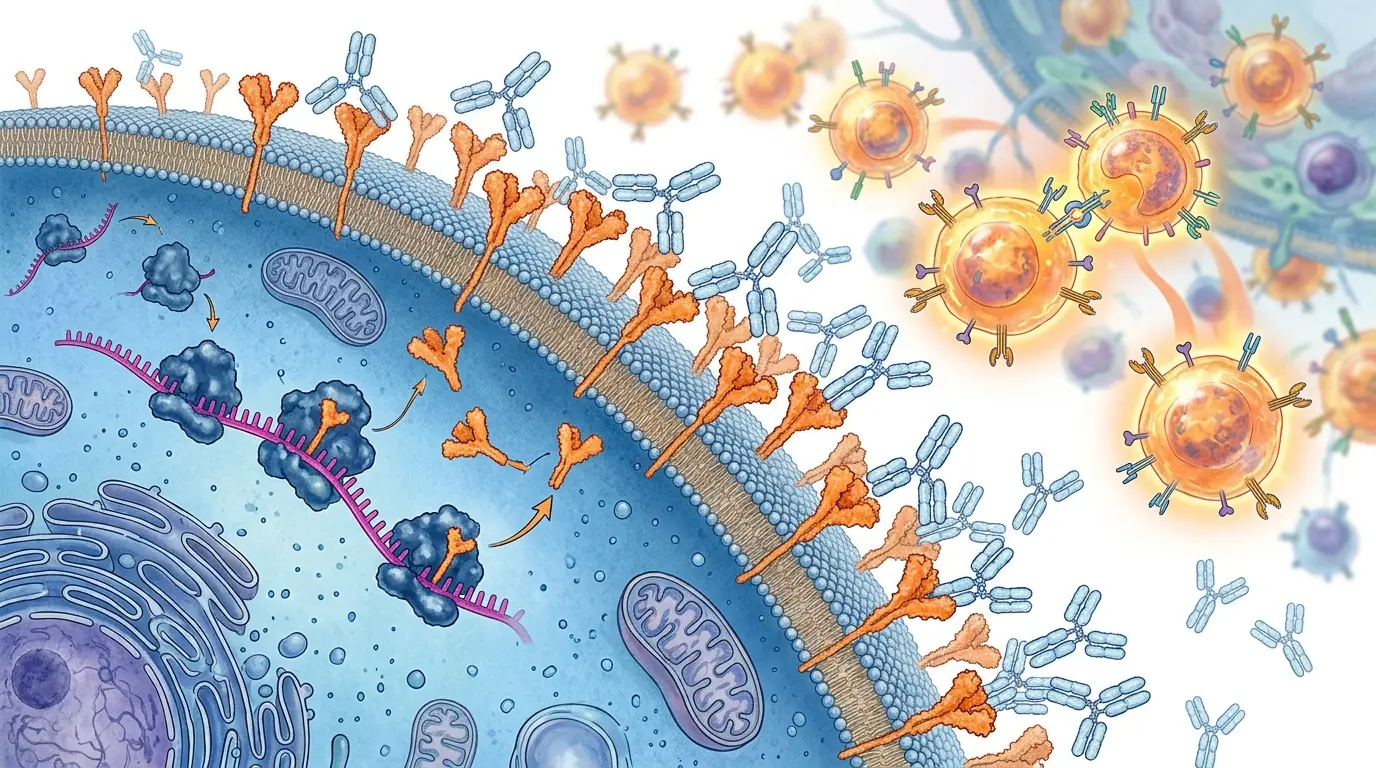
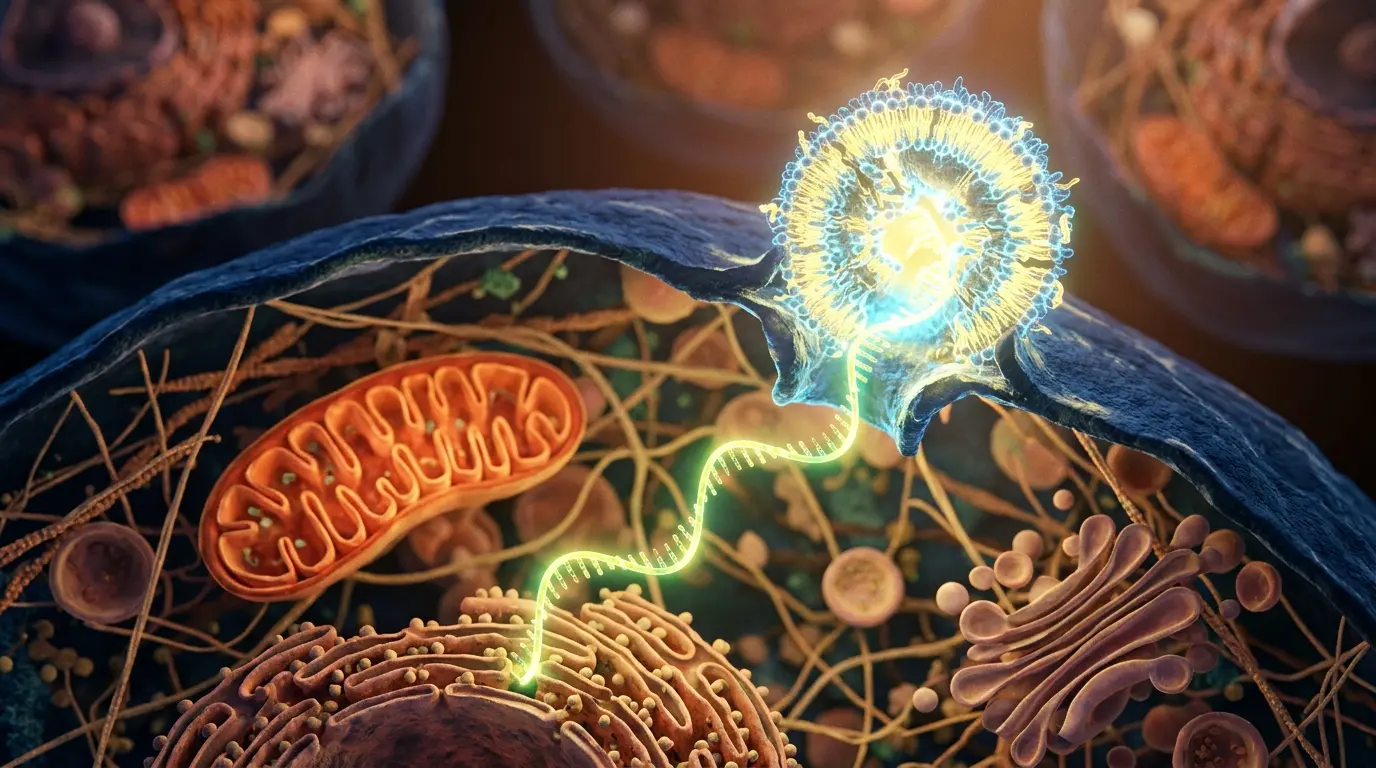
Once inside the cytoplasm of host cells—predominantly myocytes at the injection site and local dendritic cells—the mRNA never enters the cell nucleus. Instead, it docks onto ribosomes, the cell's natural protein-synthesizing machinery, initiating biological translation.
The ribosomes read the codon sequences to manufacture harmless viral spike glycoproteins, identical to the surface structures of the target pathogen.
Because mRNA vaccines operate strictly within the cytoplasm and lack reverse transcriptase enzymes, they cannot enter the cell nucleus or integrate into human genomic DNA.
After completing its translation template role, the exogenous mRNA strand is rapidly broken down into standard cellular nucleotides by endogenous ribonuclease enzymes within 48 to 72 hours, leaving no permanent foreign material behind.
Immune Mobilization: From Antigen Presentation to Long-Term Memory
Following synthesis, host cells process and display the foreign spike proteins on their cell surfaces via Major Histocompatibility Complex (MHC) molecules. Specialized antigen-presenting cells then migrate to nearby lymph nodes, initiating a coordinated adaptive immune cascade:
Activation of Specific Lymphocytes
- Helper T Cells (CD4+): Recognize antigen fragments presented on MHC class II molecules and secrete cytokines that orchestrate the broader immune response.
- B Cells: Receive activation signals to proliferate and differentiate into plasma cells, generating high-affinity neutralizing antibodies targeted against the spike protein.
- Cytotoxic T Cells (CD8+): Identify antigen fragments on MHC class I complexes, primed to recognize and destroy virus-infected cells.
Crucially, this cascade generates durable memory B cells and memory T cells. If the actual pathogen enters the body in the future, these sentinel cells recognize the threat instantly, deploying neutralizing antibodies and cellular defenses before severe infection can take hold.
Scientific Legacy and the Future of mRNA Technology
The success of mRNA vaccines relies on decades of pioneering research, notably the discovery of nucleoside base modifications (N1-methylpseudouridine) by Nobel laureates Katalin Karikó and Drew Weissman, which suppressed harmful inflammatory responses to synthetic RNA. Today, the precision and rapid adaptability of mRNA technology not only protect against viral epidemics but also drive next-generation personalized cancer immunotherapies.