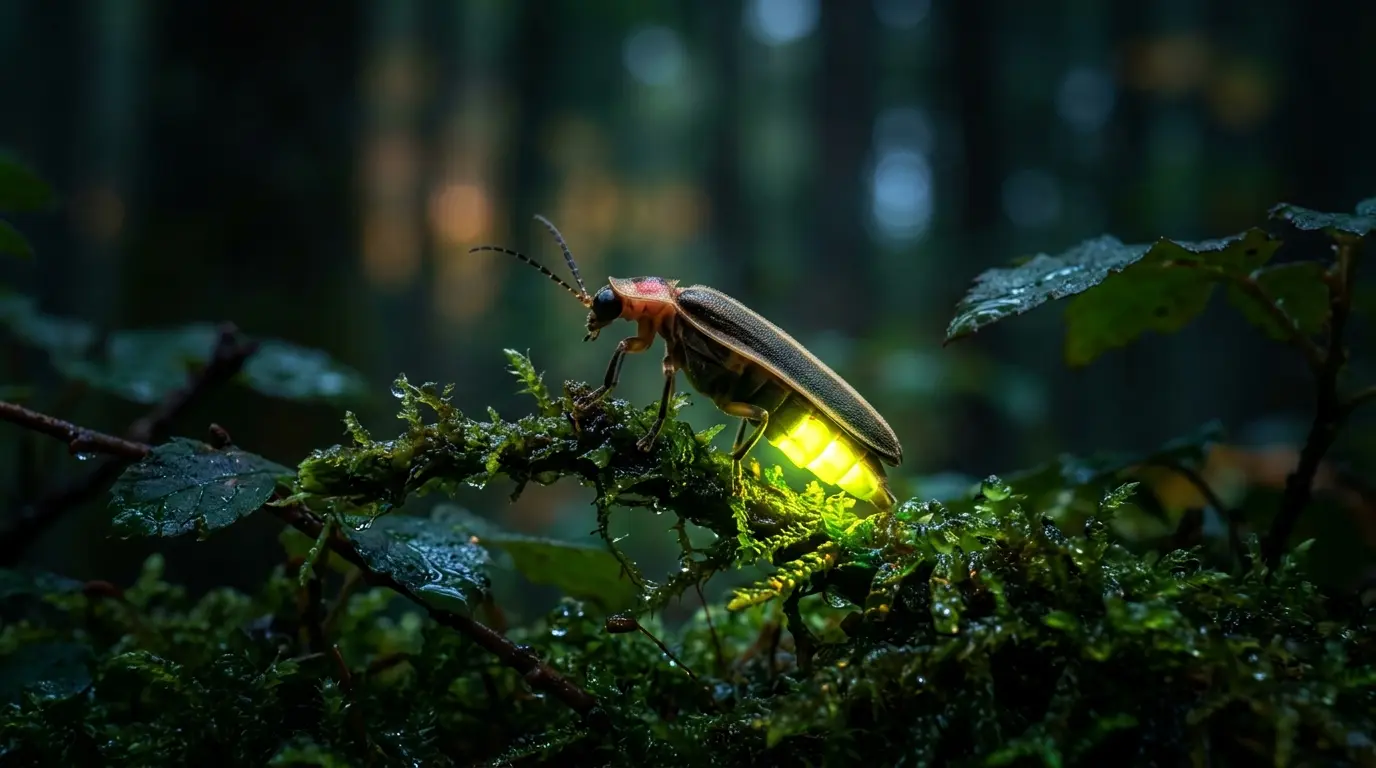
On warm summer evenings, fireflies (family Lampyridae) transform meadows and forests with mesmerizing synchronized flashes. Beyond their nocturnal poetry lies one of nature's most extraordinary biochemical marvels: bioluminescence. Unlike conventional incandescent lightbulbs, which waste up to 90 percent of their energy as thermal radiation, a firefly's glow represents true cold light. Nearly 100 percent of the chemical energy consumed in this reaction converts directly into visible light, completely sparing the insect from burning heat.
The Chemical Anatomy of Bioluminescence
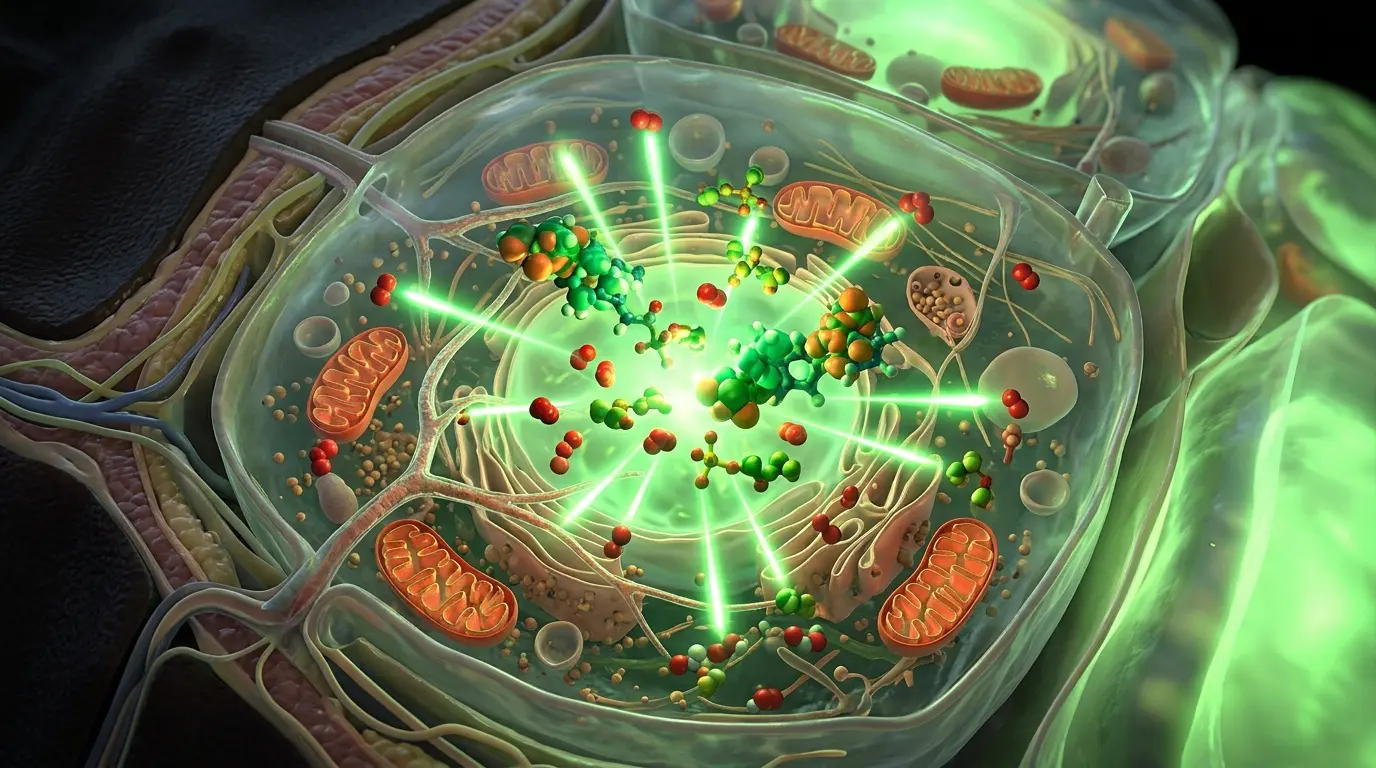
This emission originates in specialized abdominal light organs known as lanterns, composed of light-producing cells called photocytes. Producing this natural beacon requires four essential molecular components:
- D-Luciferin: A heterocyclic benzothiazole substrate that serves as the organic emitter of light photons.
- Luciferase: An essential enzyme that acts as a biocatalyst, dramatically accelerating the oxidative pathway.
- Adenosine Triphosphate (ATP) and Magnesium (Mg²⁺): Cellular energy carriers that activate luciferin into an intermediate complex known as luciferyl-adenylate.
- Molecular Oxygen (O₂): The vital oxidant that triggers oxidative decarboxylation via a transient, high-energy dioxetanone intermediate.
When molecular oxygen combines with luciferyl-adenylate inside peroxisomes, the reaction produces carbon dioxide (CO₂) and an electronically excited oxyluciferin molecule. As the excited oxyluciferin returns to its electronic ground state, it releases that stored energy as a photon of visible light, typically spanning yellow-green wavelengths between 550 and 570 nanometers.
Precision Flash Control: The Nitric Oxide Switch
For centuries, biologists wondered how fireflies could pulse their lanterns on and off with millisecond precision. Landmark research revealed that the switch relies on a minute gaseous messenger: nitric oxide (NO).
Under resting conditions, dense mitochondria surrounding the photocyte consume virtually all incoming oxygen delivered through tracheal tubules, preventing luciferase from activating. When the firefly's central nervous system signals a flash, nitric oxide synthase generates transient pulses of NO gas. Nitric oxide promptly binds to cytochrome c oxidase within the mitochondria, temporarily suppressing cellular respiration.
With mitochondrial respiration inhibited, unconsumed oxygen surges past into the peroxisomes, instantly igniting the luciferase cascade into a luminous pulse. As cellular enzymes rapidly degrade the nitric oxide, mitochondria resume consuming oxygen, extinguishing the flash in a fraction of a second.
Evolutionary Purpose and Modern Biotechnology
In nature, these rhythmic optical patterns serve as species-specific courtship displays to locate mates, as well as an aposematic warning against predators, signaling the presence of bitter defensive steroid compounds called lucibufagins.
The unmatched quantum efficiency of firefly bioluminescence has transformed fundamental biology, providing science with an exquisitely sensitive diagnostic probe.
Today, researchers harness the firefly luciferase reaction across global biotechnology. Because the luminescence requires ATP, luciferase assays enable doctors and scientists to detect bacterial contamination in food and medicine, monitor real-time gene expression, and track cancer tumor progression in non-invasive preclinical imaging.