The Void That Revolutionized the World
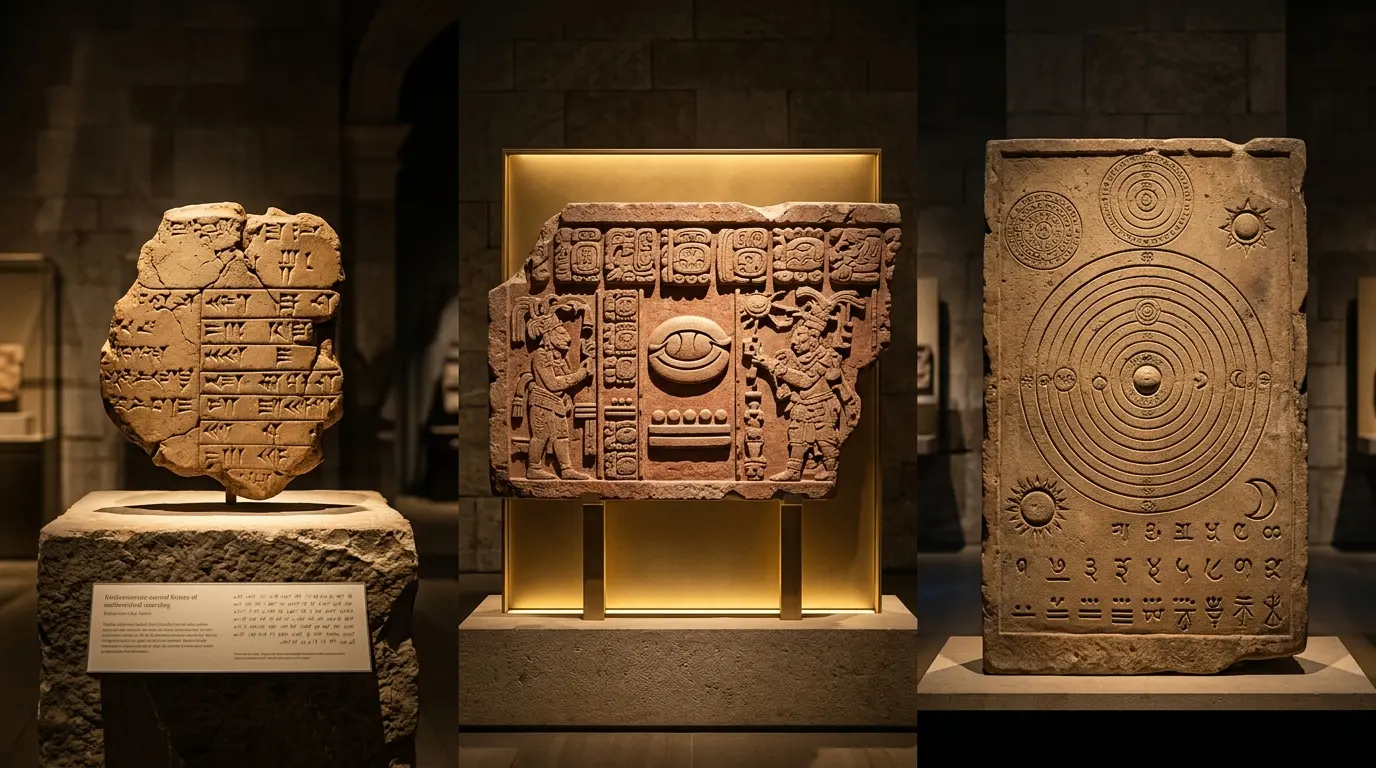
To the modern human mind, the number zero feels entirely fundamental and intuitive. However, throughout the broad arc of intellectual history, treating non-existence as a concrete mathematical entity was one of the most daring abstractions ever conceived. Without zero, calculus, analytical geometry, quantum mechanics, and the binary code sustaining the digital era could never have materialized. The evolutionary path of zero spanned millennia, meandering from Mesopotamian clay tablets and Mesoamerican monumental stelae to its definitive formulation in ancient India.
Babylon and the Maya: Zero as a Positional Placeholder
Before achieving status as an autonomous number, zero emerged out of pure administrative necessity as a positional marker or placeholder. Around the 3rd century BCE during the Seleucid era, Babylonian scribes employing a base-60 sexagesimal system struggled to distinguish numerical values like 64 from 604. To eliminate ambiguity, scribes began stamping a double-slanted wedge mark to denote an empty numeric column. Nevertheless, this Babylonian punctuation was strictly a typographical sign; it was never computed, added, or treated as a standalone quantity.
Across the Atlantic, the Maya civilization independently pioneered an extraordinarily advanced base-20 vigesimal numeral system by the 4th century CE. Mayan astronomers represented zero through stylized glyphs, most commonly a carved snail shell or turtle shell, to anchor blank place-values and signal cyclical completions within their Long Count calendar. While mathematically sophisticated, the Mayan zero was conceived primarily as a calendrical milestone and positional indicator rather than an operative algebraic quantity.
The Indian Epoch: Turning Shunya into an Arithmetic Reality
The decisive breakthrough that transformed zero from an empty mark into an operative number took place in ancient India. Indian thinkers had long embraced the philosophical notion of shunya—a foundational Buddhist and Hindu concept of the void that viewed emptiness not as a terrifying void, but as a fertile state brimming with potential.
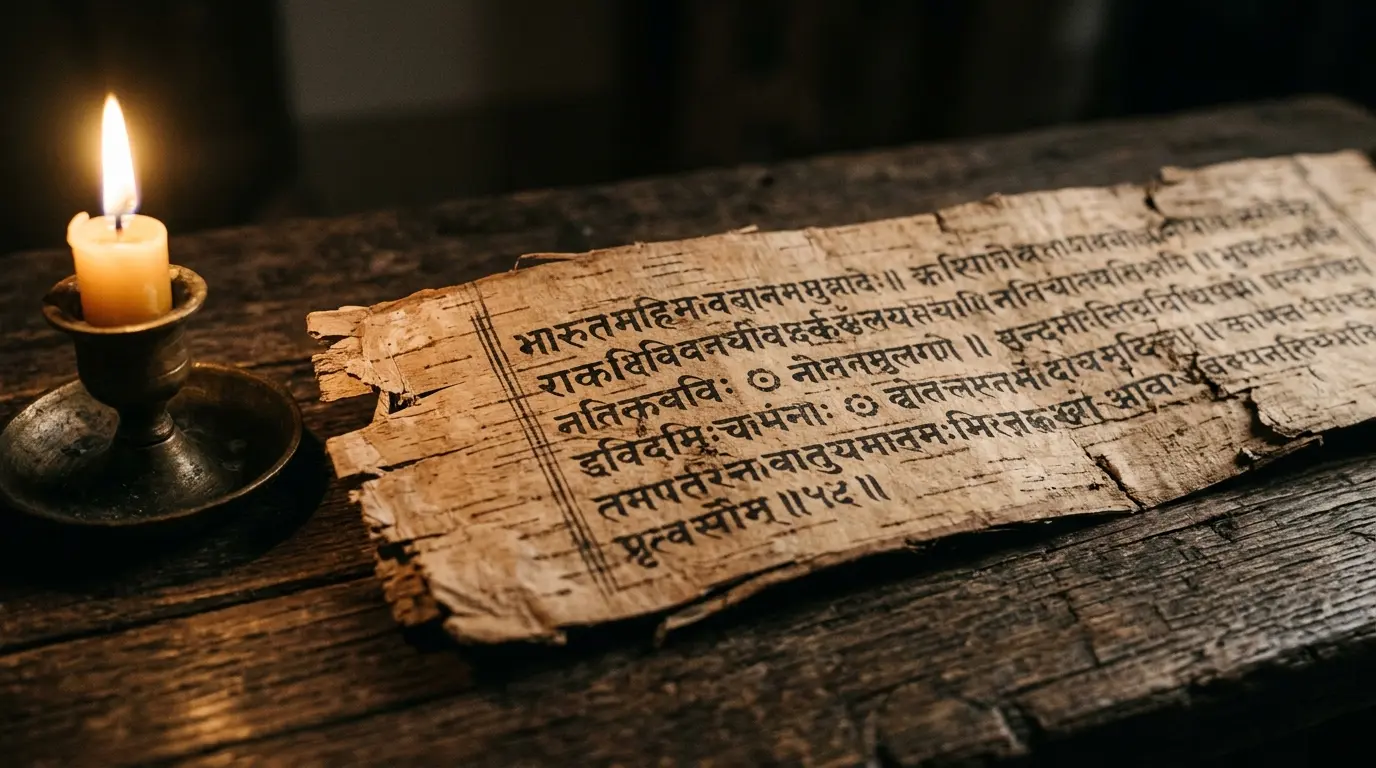
Physical proof of this transition came under scientific scrutiny with the Bakhshali Manuscript. In 2017, landmark radiocarbon testing carried out by the University of Oxford dated the oldest birch-bark folios of the document to between 224 and 383 CE. Throughout its pages, mathematicians employed a distinct black dot (known as a bindu) as a zero symbol, establishing that the graphic representation of zero existed centuries earlier than archaeological consensus had formerly held.
"When zero is added to a number or subtracted from a number, the number remains unchanged. A number multiplied by zero becomes zero." — Brahmagupta, Brahmasphutasiddhanta (628 CE)
The definitive conceptual leap occurred in 628 CE when the brilliant Indian astronomer and mathematician Brahmagupta authored the Brahmasphutasiddhanta. Brahmagupta was the first scholar in recorded history to formalize comprehensive operational rules for zero. He elevated zero into a true numerical entity governed by coherent arithmetic laws, systematizing its role alongside positive numbers and negative debts.
Transmission Through the Islamic Golden Age to the Renaissance
This revolutionary numerical framework journeyed to the vibrant intellectual centers of the Islamic Golden Age during the 9th century. Persian polymath Muhammad ibn Musa al-Khwarizmi detailed the Hindu decimal system in his treatises, rendering the Sanskrit shunya into the Arabic word sifr (meaning empty).
Centuries later, this foundational knowledge traversed Mediterranean trade routes to Western Europe. In 1202, Italian mathematician Leonardo of Pisa, widely known as Fibonacci, published Liber Abaci. He latinized sifr into zephirum, giving birth to the Italian zefiro and the English word zero. By dismantling the cumbersome constraints of Roman numerals, zero paved the way for modern quantitative commerce, global navigation, and the European Scientific Revolution.