The Microscopic Alliance Powering Ocean Reefs
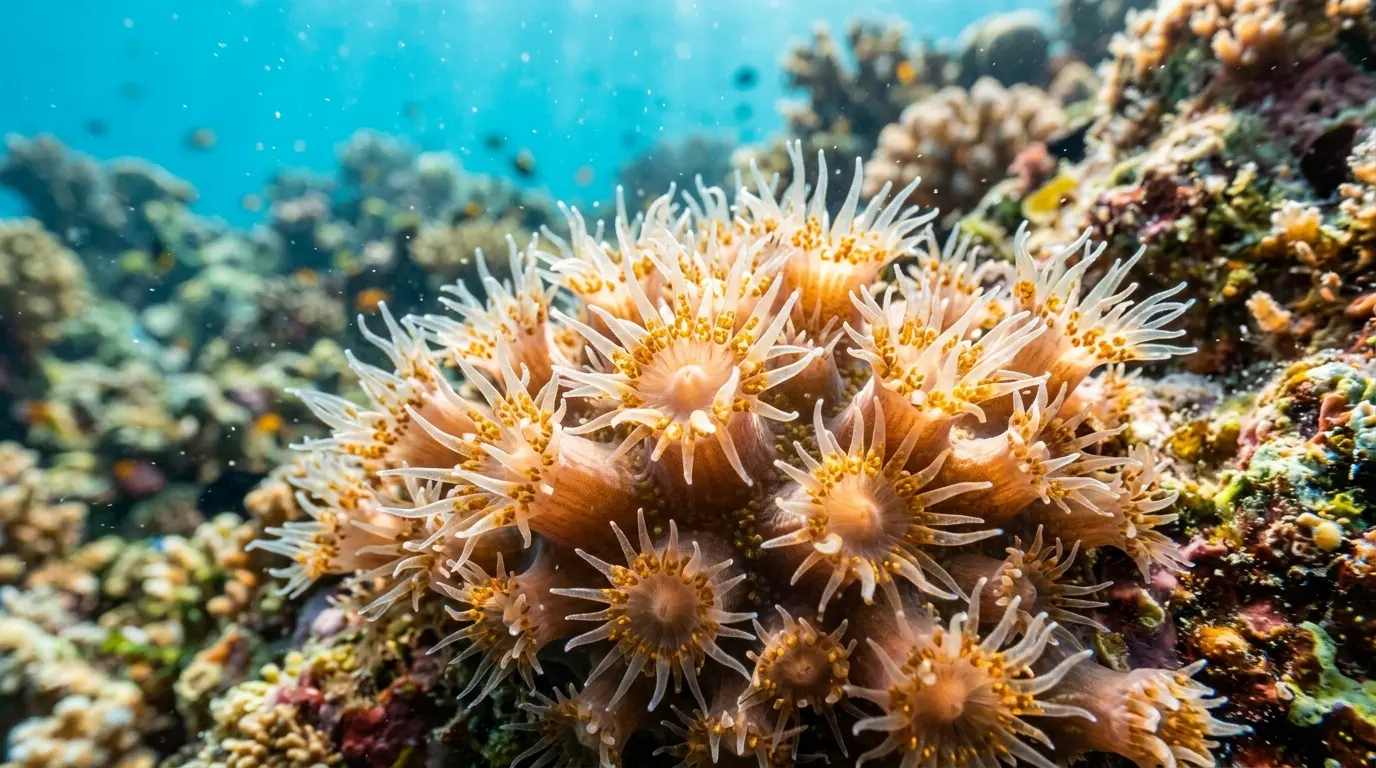
Coral reefs are frequently celebrated as the rainforests of the sea due to their breathtaking biodiversity. Although they cover less than one percent of the ocean floor, they provide critical habitat for roughly twenty-five percent of all known marine species. The fundamental engine driving this immense biological productivity is a remarkable evolutionary alliance: the mutualistic symbiosis between stony coral polyps (order Scleractinia) and photosynthetic dinoflagellates universally known as zooxanthellae (family Symbiodiniaceae).
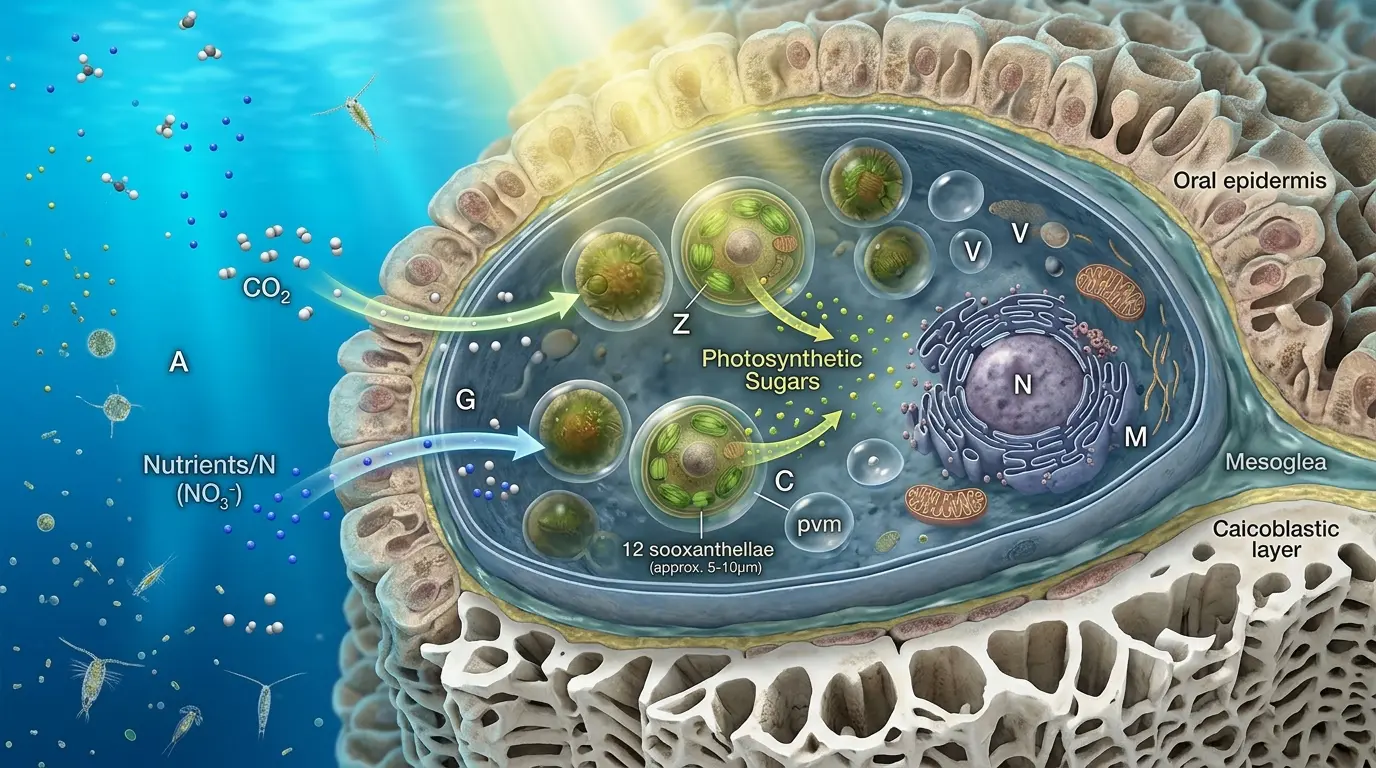
This biological partnership represents an intimate obligate endosymbiosis in which microscopic algae reside directly inside the gastrodermal cells of the coral polyps. Without this cellular collaboration, the massive calcium carbonate structures that form tropical coral reefs could never thrive in nutrient-poor (oligotrophic) ocean waters.
A Flawless Cellular Nutrient Exchange
Bathed in sunlit, shallow tropical seas, corals and zooxanthellae operate an extraordinarily tight recycling loop where virtually no metabolic byproduct goes to waste. Each partner satisfies the critical physiological demands of the other:
- The Algal Contribution: Powered by solar energy, zooxanthellae carry out photosynthesis to convert water and dissolved carbon dioxide into energy-dense organic molecules, including glucose, glycerol, and essential amino acids. Remarkably, these microalgae can translocate up to ninety percent of their synthesized organic compounds directly to the host coral. This abundant energy supply fuels polyp metabolism and significantly accelerates calcification, the biomineralization of calcium carbonate (CaCO₃) that builds the rigid reef skeleton.
- The Coral Host Contribution: In return, the coral polyp provides a sheltered environment protected from grazing predators within the photic zone. Furthermore, the coral delivers essential inorganic metabolic wastes—specifically carbon dioxide (CO₂), ammonium-based nitrogen compounds, and inorganic phosphates—which the algae require for photosynthesis and protein synthesis.
Thermal Stress and the Mechanics of Coral Bleaching
Beyond sustenance, the photosynthetic pigments of zooxanthellae endow healthy coral colonies with their rich amber, brown, and olive hues. Nevertheless, this fragile mutualism is acutely sensitive to environmental shifts. When marine heatwaves push sea surface temperatures beyond baseline summer thresholds, the delicate photosynthetic apparatus of zooxanthellae breaks down.
This physiological failure triggers the rapid overproduction of cytotoxic Reactive Oxygen Species (ROS). To safeguard its own tissues from cellular oxidative damage, the coral host is forced to eject the zooxanthellae into the water column, or the symbionts lose their pigments. This catastrophic breakdown is recognized globally as coral bleaching.
When corals lose their endosymbionts, their translucent living tissues reveal the stark white calcium carbonate skeleton underneath. Deprived of their primary energy source, bleached corals experience severe starvation and face widespread mortality unless water temperatures normalize swiftly.
Protecting a Crucial Marine Foundation
The mutualistic symbiosis between corals and zooxanthellae stands as one of the most sophisticated cooperative architectures in nature. Safeguarding these marine wonders requires urgent worldwide action to curb global carbon emissions, mitigate ocean warming, and reduce coastal pollution so this ancient alliance can endure.