An Accidental Breakthrough at St. Mary's Hospital
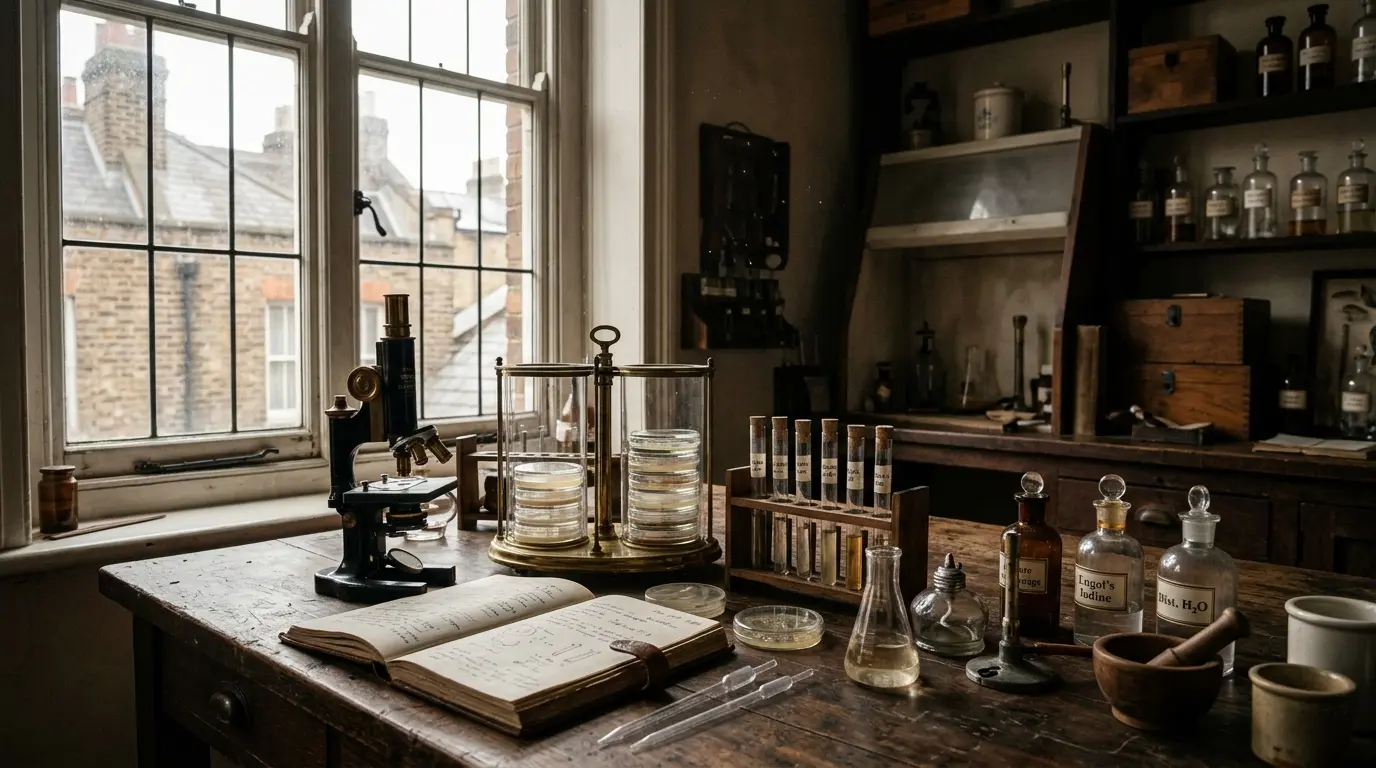
In early September 1928, Scottish bacteriologist Dr. Alexander Fleming returned to his laboratory at St. Mary's Hospital in London after spending a summer vacation with his family in Suffolk. Known as an astute researcher who famously maintained an untidy workbench, Fleming had inoculated several culture plates with Staphylococcus aureus before departing, leaving them stacked on a lab bench near an open window.
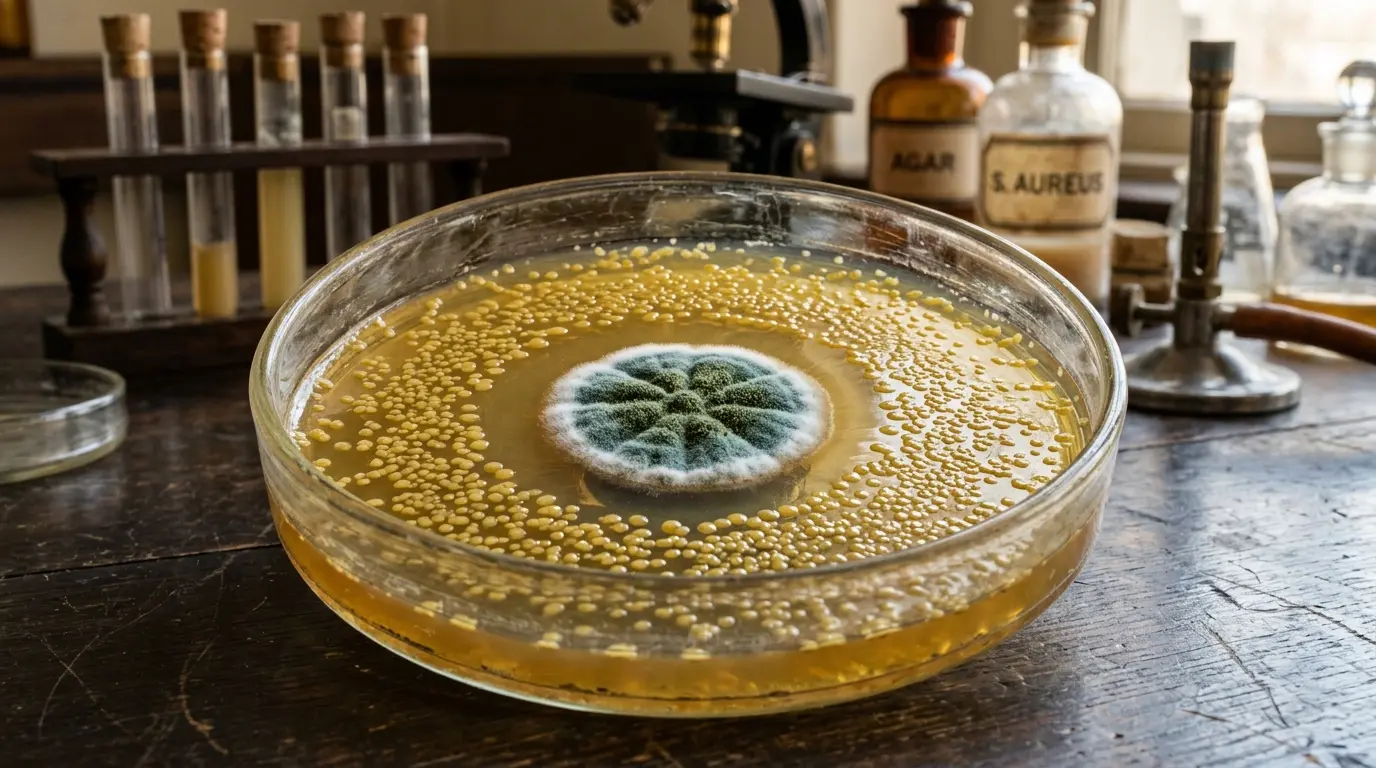
Upon inspecting the neglected plates on September 3, 1928, Fleming noticed an unexpected anomaly. One Petri dish had been inadvertently contaminated by an airborne fungal spore. Rather than discarding the ruined culture, Fleming's scientific curiosity compelled him to examine the dish closely under a lens.
The Mold Contamination That Altered History
Surrounding the growing fungal colony was a distinct, translucent halo—a clear zone of inhibition where bacterial colonies had lysed and completely dissolved. The mold appeared to exude a diffusible, chemical substance capable of killing dangerous pathogens without harming normal tissues.
"When I woke up just after dawn on September 28, 1928, I certainly didn't plan to revolutionise all medicine by discovering the world's first antibiotic... But I suppose that was exactly what I did." — Dr. Alexander Fleming
Fleming identified the organism as belonging to the genus Penicillium (initially identified as Penicillium notatum, reclassified by modern phylogenetic analysis as Penicillium rubens). Initially describing the active broth as 'mould juice', Fleming formally coined the name penicillin on March 7, 1929, to define the antibacterial compound produced by the mold.
Isolation Obstacles and the Oxford Breakthrough
Fleming published his milestone paper in the British Journal of Experimental Pathology in June 1929. However, he faced substantial biochemical obstacles: penicillin was chemically unstable and notoriously difficult to extract in quantities sufficient for clinical systemic treatment. For nearly a decade, it remained primarily a laboratory reagent used to isolate penicillin-insensitive microbes such as Haemophilus influenzae.
The decisive breakthrough occurred in the late 1930s at the University of Oxford. A pioneering team led by pathologist Howard Florey and biochemist Ernst Boris Chain, along with key developer Norman Heatley, devised innovative purification and freeze-drying techniques. In early 1941, they administered purified penicillin to the first human patient, definitively demonstrating its curative power against lethal bacterial sepsis.
The Enduring Legacy of the Antibiotic Age
The urgency of World War II catalyzed deep-tank industrial fermentation of penicillin in Peoria, Illinois, using corn steep liquor and a high-yield strain. By 1944, millions of doses reached Allied forces, dramatically curtailing fatalities from gangrene, infected battle wounds, pneumonia, and septicemia.
- The 1945 Nobel Prize: Alexander Fleming, Howard Florey, and Ernst Chain were jointly awarded the Nobel Prize in Physiology or Medicine for the discovery and therapeutic isolation of penicillin.
- The Golden Age of Medicine: This breakthrough initiated the modern antibiotic era, demoting once-fatal infectious scourges to treatable conditions.
- Early Warning on Resistance: In his 1945 Nobel lecture, Fleming presciently cautioned the medical community against the underuse and overuse of antibiotics, predicting the rise of mutant, drug-resistant bacterial strains.
The 1928 discovery of penicillin stands as an enduring monument to scientific serendipity, proving that monumental discoveries happen when chance favors a prepared, observant mind.