A Serendipitous Encounter That Changed Medical History
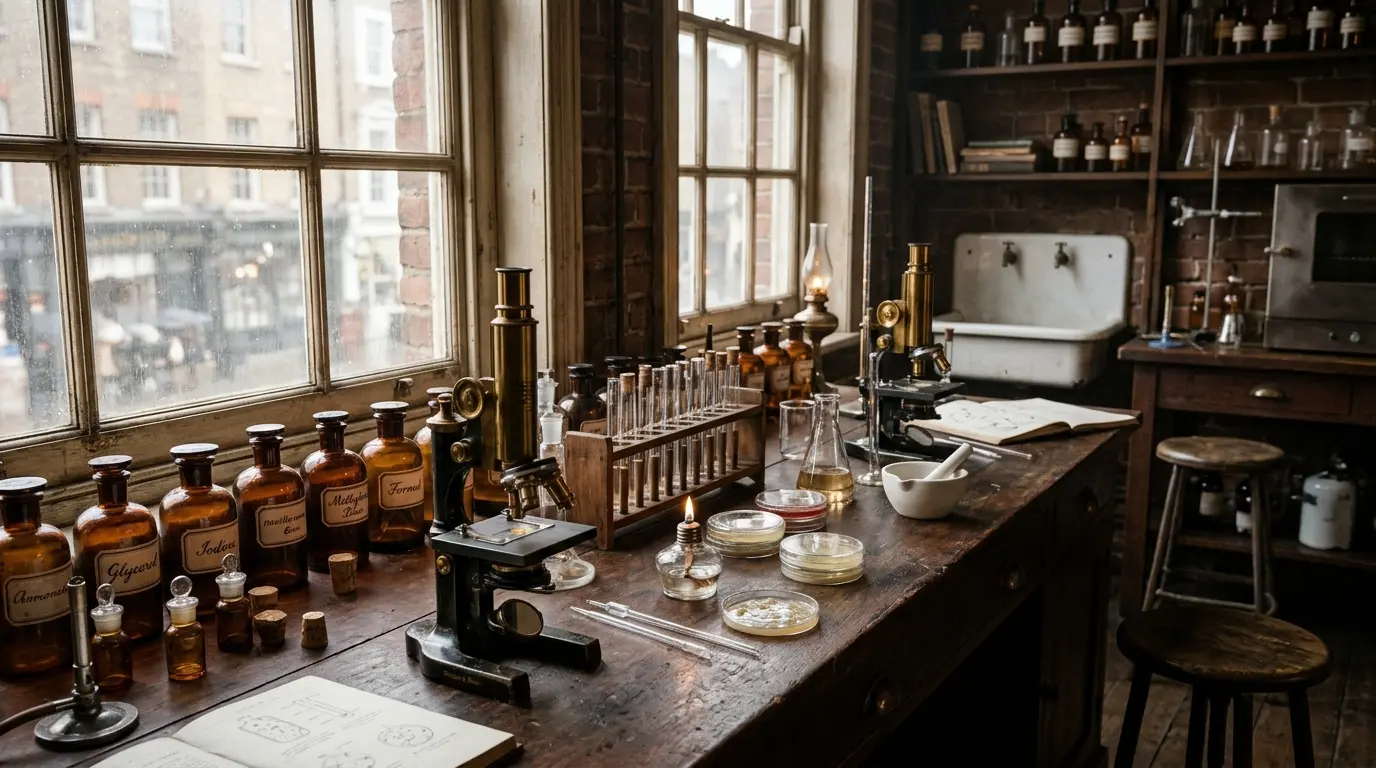
In early September 1928, Scottish bacteriologist Alexander Fleming returned to his cluttered laboratory at St. Mary's Hospital in London following a month-long summer holiday with his family. Before departing, Fleming had stacked several culture plates inoculated with Staphylococcus aureus on a laboratory bench. Inadvertently, one petri dish was left slightly uncovered near a drafty window.
The Petri Dish and the Mysterious Halo
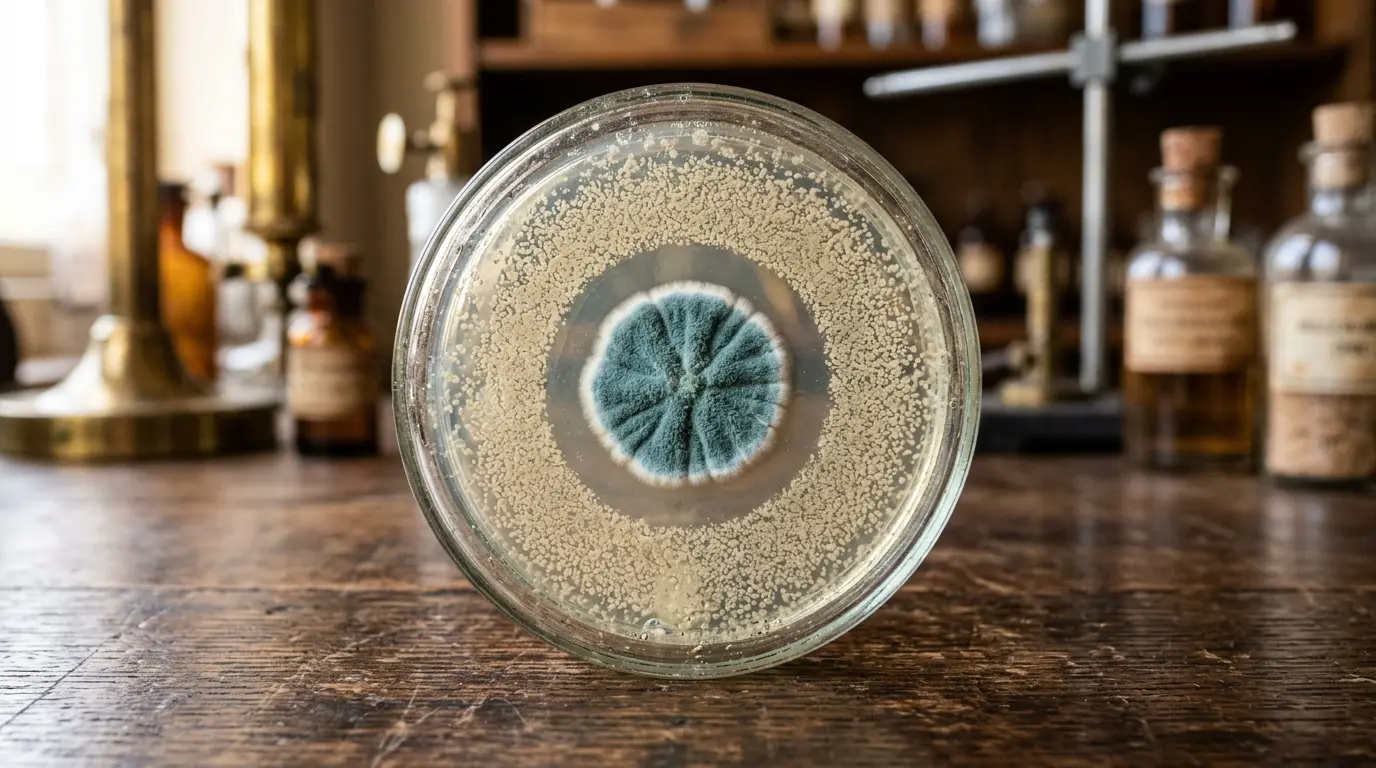
While sorting through the discarded dishes to prepare them for sterilization in a disinfectant bath, Fleming noticed an extraordinary anomaly on a contaminated agar plate. A fluffy colony of blue-green mold had sprouted. Remarkably, colonies of Staphylococcus immediately adjacent to the fungal growth were visibly dissolving, leaving a clean, transparent halo of inhibition where bacterial growth was entirely absent.
"When I woke up just after dawn on September 28, 1928, I certainly didn't plan to revolutionise all medicine by discovering the world's first antibiotic... But I suppose that was exactly what I did." — Alexander Fleming
Fleming recognized that the fungal mold was producing an exuded soluble substance capable of lysing virulent pathogenic bacteria without damaging human white blood cells. The contaminant was identified as Penicillium notatum (taxonomically revised in modern mycology as Penicillium rubens). In March 1929, Fleming formally designated this potent therapeutic substance penicillin.
Overcoming Chemical Instability to Enable Mass Production
Fleming published his seminal findings in the British Journal of Experimental Pathology in June 1929. However, because penicillin was chemically fragile and difficult to isolate in concentrated purity, Fleming was unable to yield quantities sufficient for systemic clinical treatment. The compound remained an academic discovery for over a decade.
The definitive clinical breakthrough occurred in the late 1930s at the Dunn School of Pathology, University of Oxford. A pioneering multidisciplinary team led by pathologist Howard Florey, biochemist Ernst Boris Chain, and biophysicist Norman Heatley successfully developed deep-purification techniques. Following successful human efficacy trials in 1941, American industrial facilities perfected deep-tank aerobic fermentation, supplying massive quantities of penicillin that saved countless Allied casualties during World War II.
Key Facts of the Penicillin Discovery
- Discovery Date: September 1928 at St. Mary's Hospital Inoculation Department, London.
- Target Pathogen: The virulent pathogen Staphylococcus aureus.
- Source Microorganism: The fungal mold strain Penicillium notatum (now Penicillium rubens).
- Highest Recognition: The 1945 Nobel Prize in Physiology or Medicine was jointly awarded to Alexander Fleming, Ernst Boris Chain, and Howard Florey.
Fleming's Prophetic Warning on Antimicrobial Resistance
During his Nobel lecture in December 1945, Fleming delivered a remarkably prescient warning to the global scientific community. He cautioned that improper use or sub-lethal underdosing of penicillin would inevitably select for resistant mutant strains, rendering the wonder drug ineffective. Fleming's prophetic insight remains one of the defining challenges of modern medicine as healthcare systems confront global antimicrobial resistance (AMR).